Fleet charging planned from routes and departure deadlines.
Group vehicles by energy to replace, return-to-base window and next departure. Then assign overnight and priority charging roles within available site power.
Long dwell, priority vehicles, site power and fleet operations work together.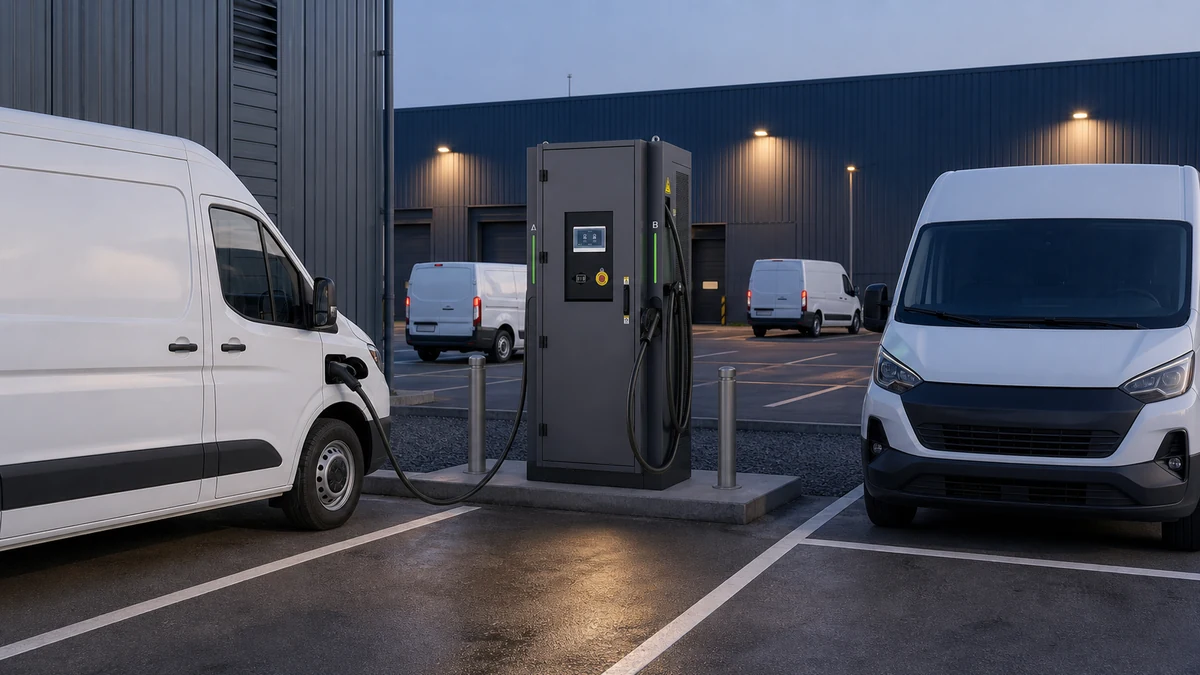
Group vehicles by daily energy need, arrival time, usable connection window and next required dispatch.
Confirm connector, inlet, charge acceptance, cable reach, measured depot demand and utility capacity.
The quotation will list port count, output, electrical work, software integration, commissioning and support.
Turn fleet operations into a staged depot charging plan.
Start with how vehicles use the site, check available power, then choose the equipment and installation phases.
- 01
Build the operating baseline
Group vehicles by class, route, daily energy need, payload or auxiliary loads, return time, next departure and seasonal operating conditions.
- 02
Check what each vehicle can accept
Record battery size, usable charging limit, AC and DC capability, connector, inlet position, cable reach and any manufacturer requirements.
- 03
Map the depot and power position
Check vehicle circulation, parking, electrical rooms, cable routes, measured peak demand, service and transformer data, tariff and utility constraints.
- 04
Assign charging roles and priorities
Use longer dwell for scheduled charging and reserve higher-power priority charging for vehicles whose energy target and turnaround require it.
- 05
Phase, commission and operate
Define the first active block, reserved expansion paths, control rules, software integration, exception tests, driver training and maintenance responsibility.
Two ideas explain most fleet-charging decisions.
Send power first to vehicles leaving soonest.
The controller shares available site power using each vehicle’s energy target and departure time.
One verified power ceiling shared across the charging yard.
Active sessions can be coordinated within the approved site limit instead of assuming every charger runs at maximum output together. Utility check still decides whether an upgrade is required.
Different fleet schedules create different charging roles.
Use the row closest to your fleet. We tailor charger quantity, delivered power and sharing rules to your vehicles, routes, return windows and departures.
| 05 — FLEET OPERATING PATTERNS | Operating pattern | Practical starting point | Confirm before ordering |
|---|---|---|---|
| Predictable overnight return | Service cars or delivery vans return after work and remain parked until a known morning departure. | Scheduled long-dwell charging distributed across the overnight window, with exceptions identified before dispatch. | Energy per route, actual connection time, vehicle acceptance, morning departure groups, tariff and available site power. |
| Staggered or two-shift operation | Some vehicles return briefly while another departure group remains parked for longer. | Separate long-dwell and priority roles, then allocate shared power according to energy need and next departure. | Shift overlap, turnaround time, arrival state of charge, charger sharing, reserve vehicles and dispatch tolerance. |
| Mixed commercial vehicle classes | Passenger vehicles, service vans and medium-duty delivery vehicles use different connectors, inlet positions and charging limits. | Compatible charging zones coordinated by one project-defined electrical and operating plan. | Every named vehicle model, connector, voltage range, charge acceptance, parking geometry and cable reach. |
| Phased or multi-depot growth | The first vehicle group is confirmed while later fleet orders, sites or utility work remain open. | Install a verified first block and reserve approved electrical, civil, communications and operating provisions for later phases. | Vehicle procurement dates, site-by-site demand, utility milestones, expansion trigger, reporting model and construction scope. |
Long dwell, priority vehicles, site power and fleet operations work together.
See how chargers, power control, software and installation fit together. Your quote shows exact quantities and included services.
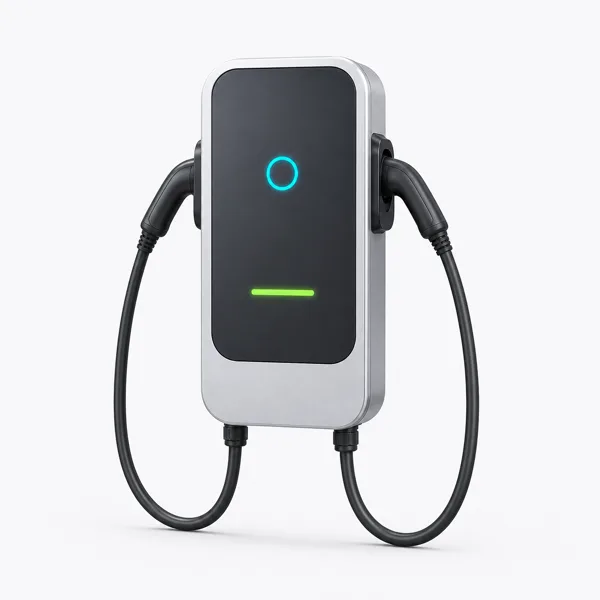
Scheduled overnight charging ports
AC wallbox or pedestal format and any lower-power charging role selected from vehicle capability, dwell and layoutUses the longest parking windows without assuming every fleet vehicle needs high-power DC charging.
Port count confirmed from fleet data View matching product family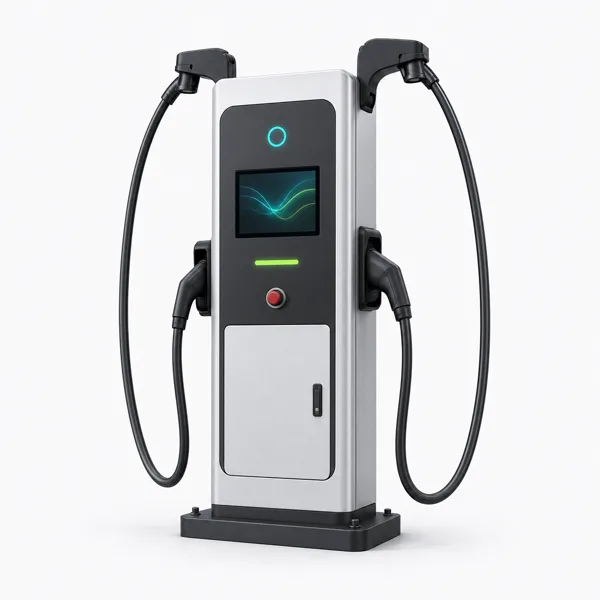
Shared DC priority-charging layer
DC output, dispensers, connectors and sharing arrangement selected for verified short-turn energy targetsDirects higher-power equipment toward vehicles whose route and next departure justify the additional site demand.
Vehicle and turnaround data needed View matching product family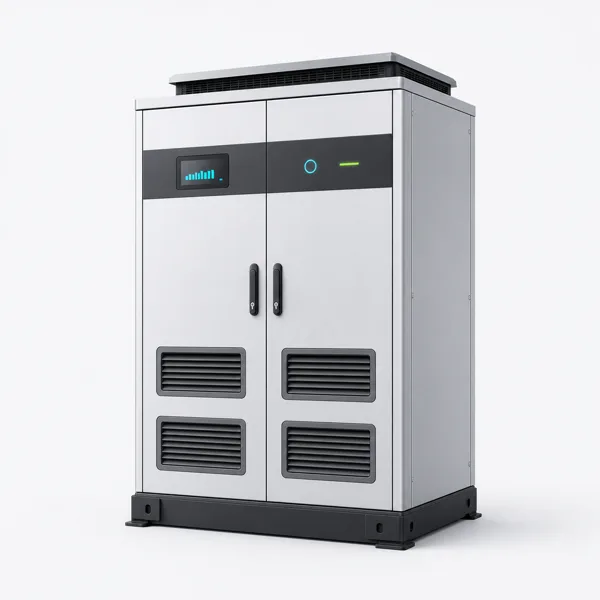
Depot distribution and managed power ceiling
Project-defined electrical distribution, total charging ceiling and allocation rules commissioned against the site designCoordinates active sessions with the approved depot-power plan while leaving transformer and utility-upgrade decisions to the electrical assessment.
Controls sized from site power data View matching product family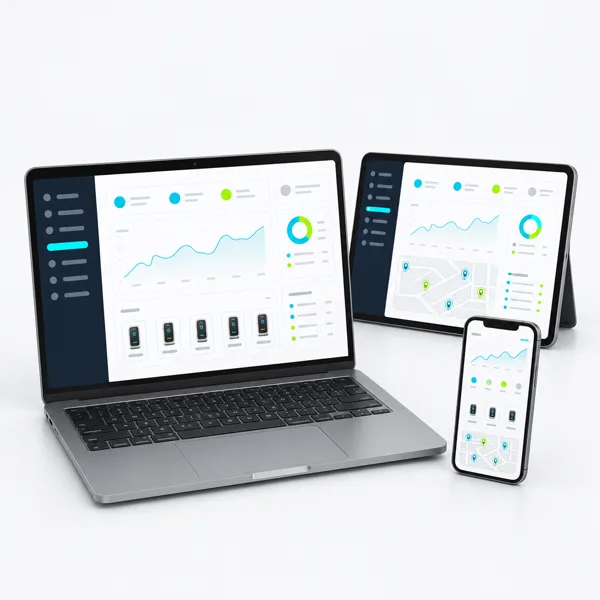
Vehicle, shift and charging operations platform
Vehicle groups, energy targets, ready times, session records, alerts and fleet-system connections included in your quoteGives operations staff one view of charging progress, ready-time risks and faults.
Software scope confirmed in quote View matching product familyStart with vehicle duties, depot power and departure deadlines.
Send what you have today—your site plan, parking or vehicle schedule and power data. We will show what EVBBC supplies and what your local installer completes.
- Country, depot city and target operating date
- Phase-one vehicle count, classes, models and planned later fleet phases
- Daily routes, typical distance, payload, auxiliary loads and seasonal operating conditions
- Return times, usable connection windows, next departures and shift overlap
- Typical arrival energy or state-of-charge data from telematics when available
- Battery size, AC and DC charging limits, connectors and inlet positions
- Available utility service, transformer, panel and recent interval or peak-demand information
- Electricity tariff, time-of-use periods and demand-charge structure
- Depot plan, vehicle circulation, parking groups, electrical-room location and cable routes
- Required access, vehicle identification, charging records, alerts and fleet-system integrations
- Redundancy, driver workflow, maintenance, spare-parts and fault-response requirements
- Equipment, civil work, installation, commissioning, training and future-expansion scope
Answers before the fleet commits to equipment.
01 Does every fleet vehicle need its own charger? +
Not automatically. The answer depends on overlapping connection windows, vehicle movement, charger sharing, departure groups and the operational redundancy required by the fleet.
02 Should a fleet depot use AC or DC charging? +
Long predictable parking windows can support scheduled AC charging, while short turnarounds or larger energy targets may require a DC role. The mix follows vehicle capability, energy need, dwell and available site power.
03 Can the charging system guarantee every vehicle is ready for dispatch? +
Software can prioritise energy targets and flag exceptions. We confirm ready-time rules and exception handling during commissioning with your real vehicle and site data.
04 Can managed charging avoid a transformer upgrade? +
It can reduce coincident charging demand and may reduce or defer part of an upgrade. The utility and electrical assessment determine whether the existing transformer, service and distribution equipment are sufficient.
05 What route data is needed for the first design? +
Start with vehicle groups, daily distance or energy use, return and departure times, payload or auxiliary loads, seasonal conditions and any available telematics showing arrival energy and dwell.
06 How are connectors and charging power confirmed? +
Check each named vehicle model, inlet, connector, voltage range and AC or DC charge-acceptance limit with the vehicle provider and charging-equipment provider before ordering.
07 Can cars, vans and medium-duty vehicles share one depot system? +
They can use a coordinated electrical and operating platform when compatibility, parking geometry, cable reach, charging roles and access rules are confirmed for each vehicle group.
08 Can chargers be shared between shifts? +
Yes when vehicle movement, connection windows, charging duration and dispatch rules allow it. The design must confirm which port serves which vehicles and what happens when arrivals are late or a charger is unavailable.
09 What should the fleet operations platform record? +
The platform records vehicle ID, energy delivered, connection time, ready-time target, charger status and alerts. Your quote lists included integrations and support.
10 When should solar or battery storage be included? +
Evaluate them after the fleet load profile, utility limit, tariff, resilience requirement, available space and lifecycle cost are known. They are not automatic parts of every depot.
11 What changes project cost and delivery time? +
Key variables include vehicle mix, AC and DC roles, simultaneous demand, utility work, switchgear, cable distance, civil construction, equipment protection, software, freight, permits, installation, commissioning, support and expansion provisions.
12 What is the payback period for fleet charging? +
There is no universal month figure. Commercial modelling requires local electricity and tariff data, vehicle use, energy per vehicle, equipment, freight and installation costs, network or payment fees, operating and maintenance cost and realistic utilisation or duty-cycle assumptions.
Fleet-charging and depot design resources
- U.S. DOE Alternative Fuels Data Center — Electric Vehicles for Fleets
- U.S. DOE Federal Energy Management Program — Managed EV Charging for Federal Fleets
- U.S. DOE Federal Energy Management Program — Smart Charge Management Implementation for Federal Fleets
- National Laboratory of the Rockies — EVI-EnSitePy Site Design and Analysis Tool
- U.S. DOE Alternative Fuels Data Center — Procurement and Installation for EV Charging Infrastructure
- U.S. DOE Federal Energy Management Program — EVSE Electricity Measurement and Reporting Practices
Turn route and shift data into a practical depot plan.
Share the vehicle groups, routes, return windows and target country. Add telematics, power data and a depot plan when available.