Help prevent charger demand from overloading the building.
The controller watches how much power the site is already using and shares the remaining capacity across compatible chargers. Your quotation lists the meters, limits, priorities and fallback behaviour for your site.
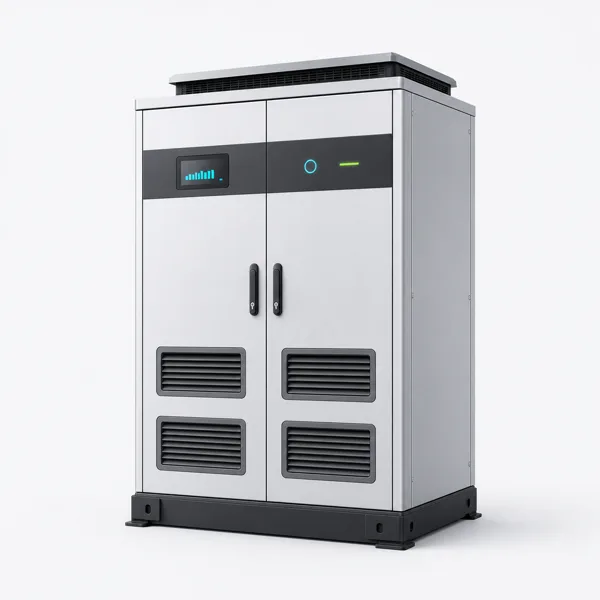
Use power control when chargers share capacity with a live site.
Use reliable electrical data and a safe operating ceiling whenever chargers share power with an active property.
Hotel, mall and office buildings
Adjust charging allocation as lifts, kitchens, cooling, lighting and other building loads change through the day.
Fleet departure groups
Use an agreed priority rule to direct available depot power toward the vehicles with the earlier or more urgent operating window.
Shared residential parking
Phase charging groups around the building supply, resident demand and the chosen access and electricity-allocation process.
Solar, storage and charging sites
Coordinate the charging target with available generation, storage operating limits, other site loads and the confirmed operating mode.
Choose what shares power before choosing the controller.
Start with the buyer problem. Your quotation then lists the meters, communications, compatible chargers and response rules.
Whole-site headroom control
- Power decision
- Charger power rises or falls with the spare capacity available in the building
- What shares power
- Building loads and charging groups managed under one site limit
- Charger interface
- Charger communication and command path confirmed for the selected equipment
- Best starting fit
- Hotels, malls, offices and apartments sharing a live building supply
Your quote lists the meter points, update speed, reserve margin and fallback behaviour.
Charging-group power sharing
- Power decision
- A fixed charging allowance is distributed across the connected ports
- What shares power
- One charger group or feeder managed inside a defined allocation
- Charger interface
- Compatible charger models, gateway and network method confirmed in the quote
- Best starting fit
- Sites with a known charging budget and changing simultaneous use
Your quote lists the group limit, sharing rule, minimum service and behaviour when communications stop.
Departure-priority fleet control
- Power decision
- Available depot charging power follows the agreed vehicle priority schedule
- What shares power
- Vehicle or charger groups linked to route and departure needs
- Charger interface
- Fleet charger and management-system interfaces confirmed per project
- Best starting fit
- Return-to-base fleets with different departure times or route energy needs
Your quote lists priority inputs, operator overrides, exception handling and reports.
See how building power and charging can appear in one view.
The sample screen brings grid, building, solar, storage and charging signals together with demonstration data.
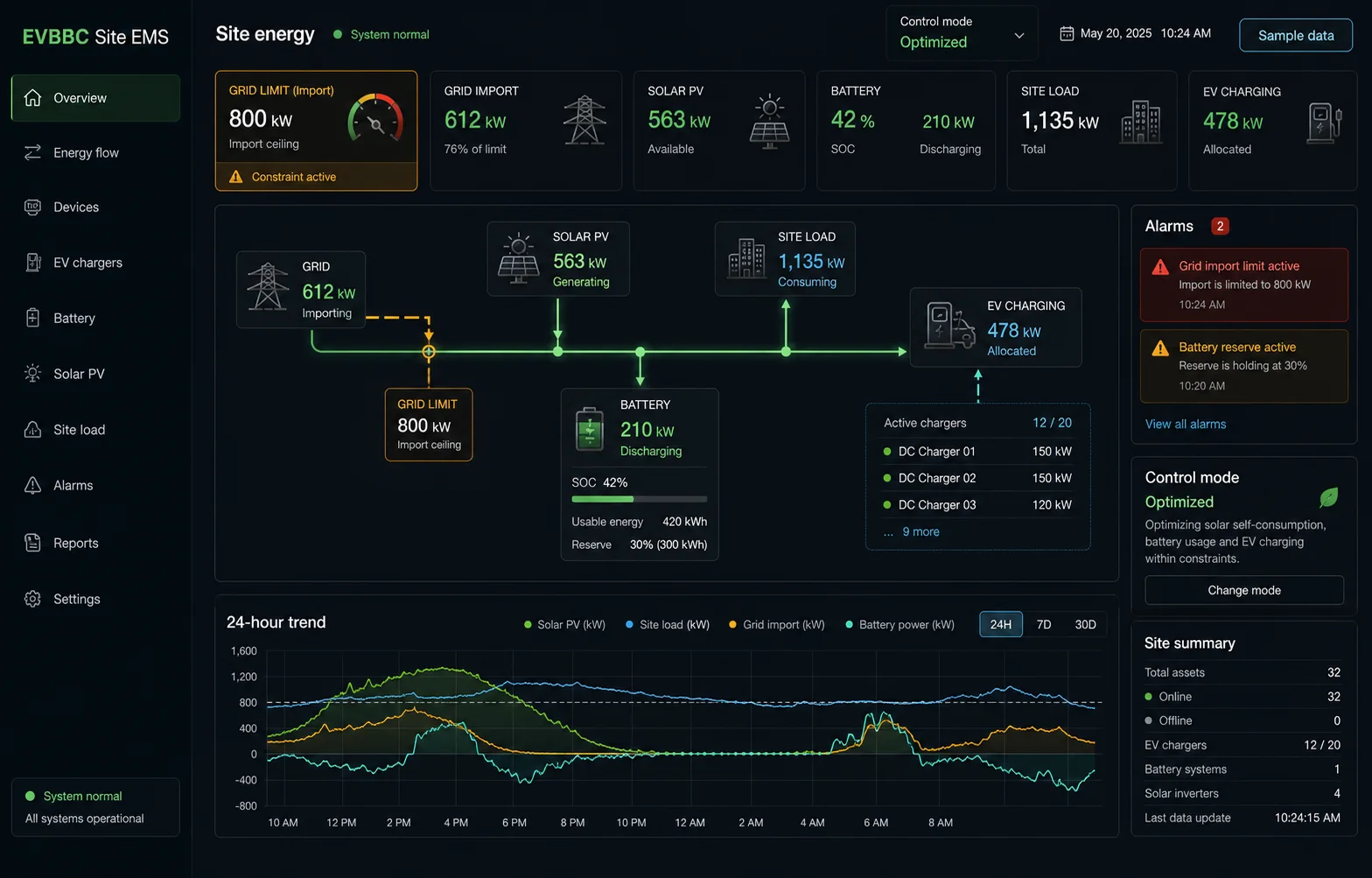
Demonstration data shows one possible operating view. Your quotation lists the measurements, limits, controls, alarms and integrations included.
This example dashboard shows the readings, alarms and controls that can be included for your site.
The controller connects the site limit to the charging plan.
Apply one site-power limit across the AC lane, DC lane and operating platform.
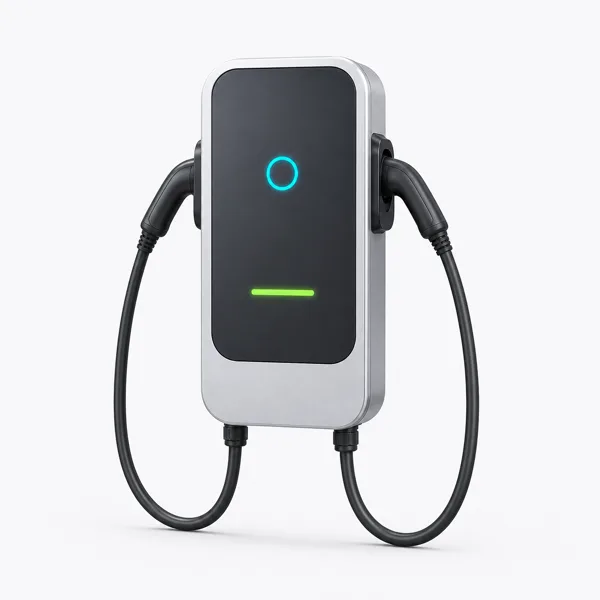
Commercial AC charging
Share the available power across more longer-stay ports according to the agreed group rule.
See how it fits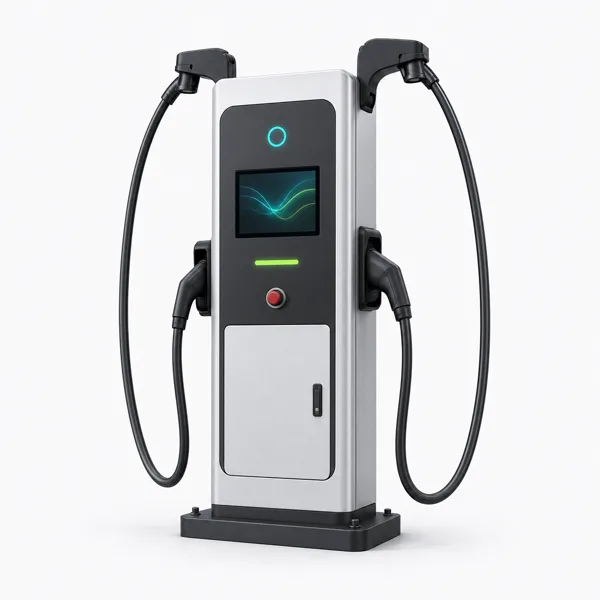
Commercial DC fast charging
Coordinate the higher-power lane with live site demand and the selected charging priorities.
See how it fits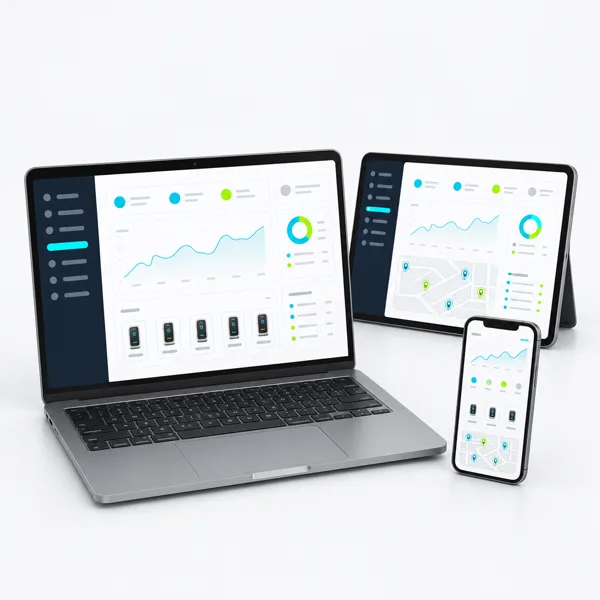
Charging management platform
Expose the status, controls and reports included in the confirmed operator workflow.
See how it fitsSend recent electrical data so we can set a safe charging limit.
Define what is measured, which chargers can be controlled and how the site should behave when data or communications change.
- Single-line diagram, supply voltage, transformer, switchboard, feeder and protection information
- Recent site-demand data and the owner- or utility-confirmed operating ceiling
- Measurement points, meter or sensor interfaces, sampling needs and reserve margin
- Charger families, quantities, ratings, communications and intended control groups
- Priority, minimum service, operator override, alarm and fallback behaviour
- Commissioning checks, required documents, warranty and support responsibilities
Get the right information at each buying step.
Download the worksheet now. Your quotation adds the selected configuration, and your confirmed order adds the handover set.
Commercial EV charging project worksheet
Share the site, vehicles, power information, destination and timeline needed for a useful first proposal.
PDF - 2 pages Download the worksheetSelected site-power control scope
Lists the meter points, site limit, charger groups, priority rules, interfaces and fallback behaviour included.
Included with your quotation Add this document scope to my quoteControl-system commissioning and handover pack
Your confirmed order lists the signal schedule, commissioning checks, operating instructions, warranty and support documents.
Included with your confirmed order Plan my handover packUse the worksheet to share your starting details. Your quotation and order list the exact specifications, documents, responsibilities and commercial terms included.
Answers before you select a dynamic load-management system.
What does dynamic load management do in plain language?
It measures how much power the site is using, calculates what remains for charging and shares that power across compatible charger groups using the priorities listed in your quote.
Does load management remove every need for an electrical upgrade?
Not always. Power control can use existing capacity more efficiently, but your electrical data still determines whether feeders, switchgear, transformer capacity or other works are needed.
Can AC and DC chargers share one site-power limit?
Yes, when the selected meters, chargers and command interfaces support the design. Your quotation lists which charger groups are controlled and how priority works.
What happens if communication is interrupted?
Your quotation lists the safe charger behaviour, local limits, alarms, operator actions and restart checks to use if communications stop.
What data should I send for a site-power plan?
Send the single-line diagram, transformer and switchboard data, recent demand profile, intended chargers, network information, operating priorities and the owner- or utility-confirmed site limit.
Plan available building power and the charging mix together.
Add site-power control to your charging blueprint.
Choose the site, spaces, market and connectors. Your brief will include the recommended charger groups and local electrical inputs needed to set the site-power limit.
The first plan shows which data is needed. Your quotation lists the exact controller and operating behaviour.