Size the energy system before choosing the charger power.
Start with vehicle energy, charging windows, other site loads and the seasonal solar resource. Then confirm whether the site is fully isolated, weak-grid or grid-connected with outage backup.
Solar, battery, control and charging work as one system.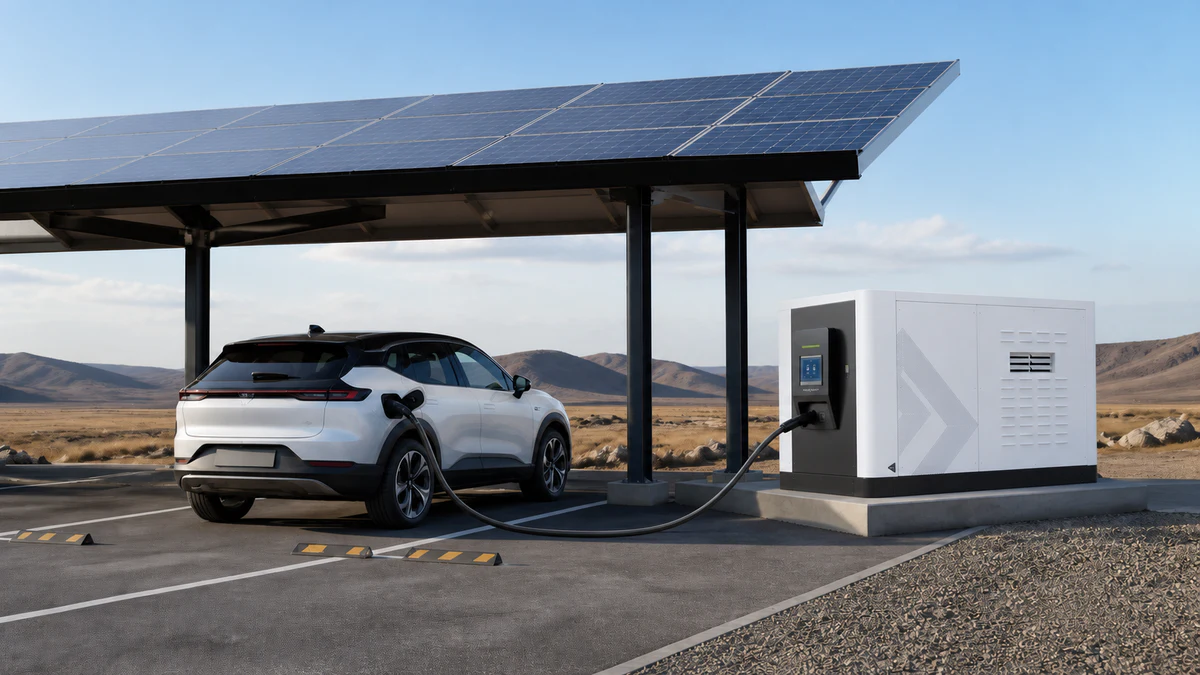
Map daily energy, arrivals, departures, simultaneous sessions and the site's other electrical loads.
Separate a fully isolated site from weak-grid operation or grid-connected outage backup.
The quotation will list PV, storage, power conversion, controls, charger roles, certifications and operating responsibilities.
Turn daily vehicle demand into a workable solar-and-storage system.
Start with how vehicles use the site, check available power, then choose the equipment and installation phases.
- 01
Define vehicle duty and site loads
Record vehicle types, daily energy, arrival and departure windows, simultaneous charging, required departure readiness and non-charging loads such as lighting, communications or site facilities.
- 02
Choose the operating mode
Confirm whether the site is fully isolated, weak-grid or grid-connected with backup objectives. Define critical loads, service priorities, outage objectives, permitted supplementary generation and the required restart sequence.
- 03
Model the time-based energy balance
Compare seasonal solar resource with charging and site-load profiles, battery usable energy and power, conversion losses, temperature, reserve, degradation assumptions and the allowed operating limits.
- 04
Fit the physical and safety plan
Check array location, shading, wind, snow, flood, dust or corrosion exposure, battery siting and thermal management, authority access, vehicle circulation, cable routes and accessible use.
- 05
Confirm equipment and responsibility
Define PV, storage, power conversion, energy controls, protection, charging roles, connectors, communications, interconnection where applicable, commissioning, maintenance and emergency responsibilities.
Two choices change the whole system.
A small power system that must balance itself.
Without the utility grid stabilising or refilling the system, local generation, storage, controls, protection and any approved backup must keep supply and demand inside the project's operating limits.
Solar and storage beside the grid, with a separate outage plan.
A grid-connected system still follows utility interconnection rules. Solar panels and a battery do not by themselves prove that chargers remain available during an outage; intentional islanding, selected loads, protection and restart behaviour must be designed and approved.
Different energy connections create different charging architectures.
Choose the row that matches your power connection. We size solar, battery and chargers from your vehicle schedule and required service level.
| 05 — REMOTE-SITE OPERATING PATTERNS | Operating pattern | Practical starting point | Confirm before ordering |
|---|---|---|---|
| Fully isolated daily-use site | No utility supply is available and vehicles return on a reasonably repeatable schedule. | Build the charging schedule around a time-series PV and storage model, project-defined operating reserve and an approved service or supplementary-generation plan. | Worst-season solar resource, daily vehicle energy, overlapping sessions, other loads, reserve, restart method and local service capability. |
| Weak-grid remote property | A utility connection exists but its capacity or availability cannot support unrestricted charging. | Treat the grid as one project-defined source and coordinate charging limits, solar and storage around the verified service position. | Service limit, outage history, tariff, export rules, interconnection, protection, utility requirements and future upgrades. |
| Grid-connected resilience site | Normal charging uses the grid, while selected vehicles or critical loads need a defined outage role. | Use normal grid-connected operation with a separately designed intentional-islanding scope for the approved critical bus. | Critical ports and loads, outage objective, transfer and restart sequence, protection, utility approval and compatibility with any backup source. |
| Seasonal or phased remote operation | Vehicle demand, solar resource, weather or site occupancy changes materially during the year. | Start with a measured first phase, explicit operating limits and reserved physical or electrical paths for later approved capacity. | Seasonal demand and irradiance, future vehicles, transport access, land, environmental design conditions and the expansion trigger. |
Solar, battery, control and charging work as one system.
See how chargers, power control, software and installation fit together. Your quote shows exact quantities and included services.
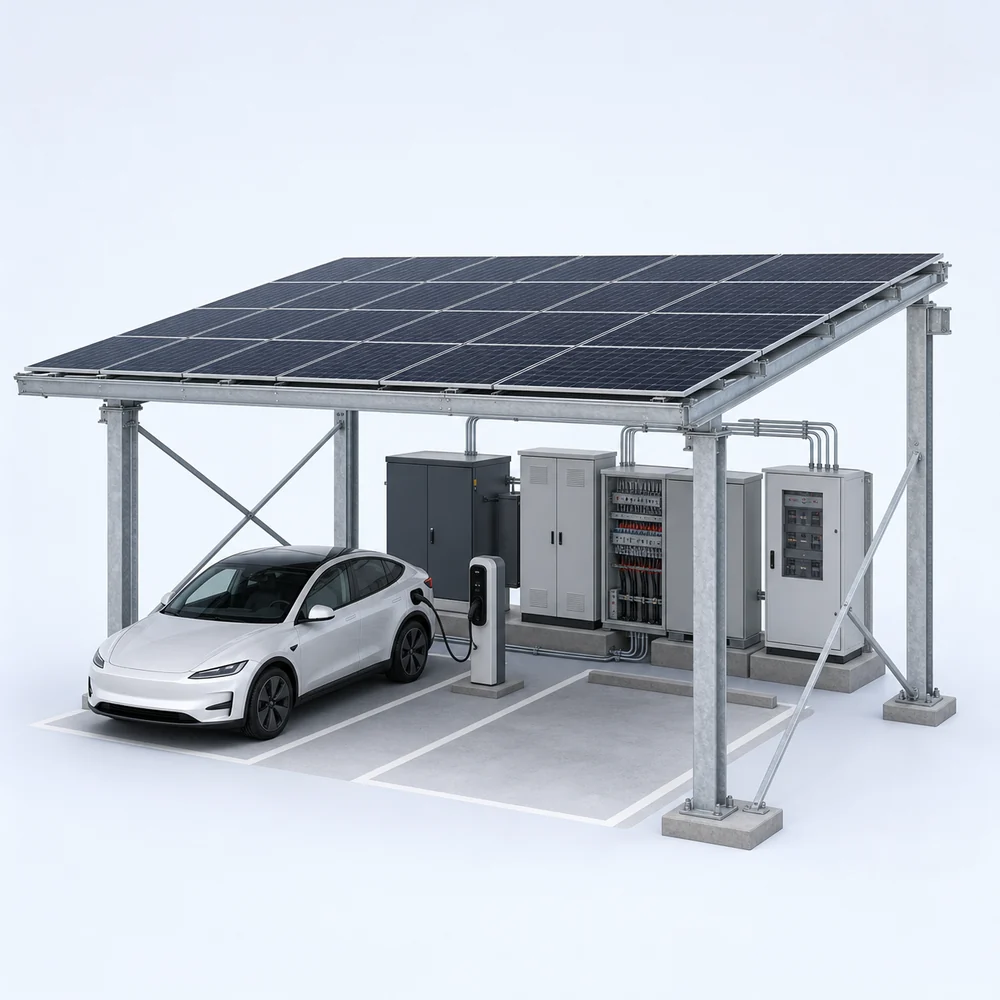
Solar generation sized for your site
Array location, capacity, mounting, inverter architecture and environmental design selected from the resource and site surveyProvides local energy, but the array rating alone does not determine charger power or service continuity.
Resource and site data needed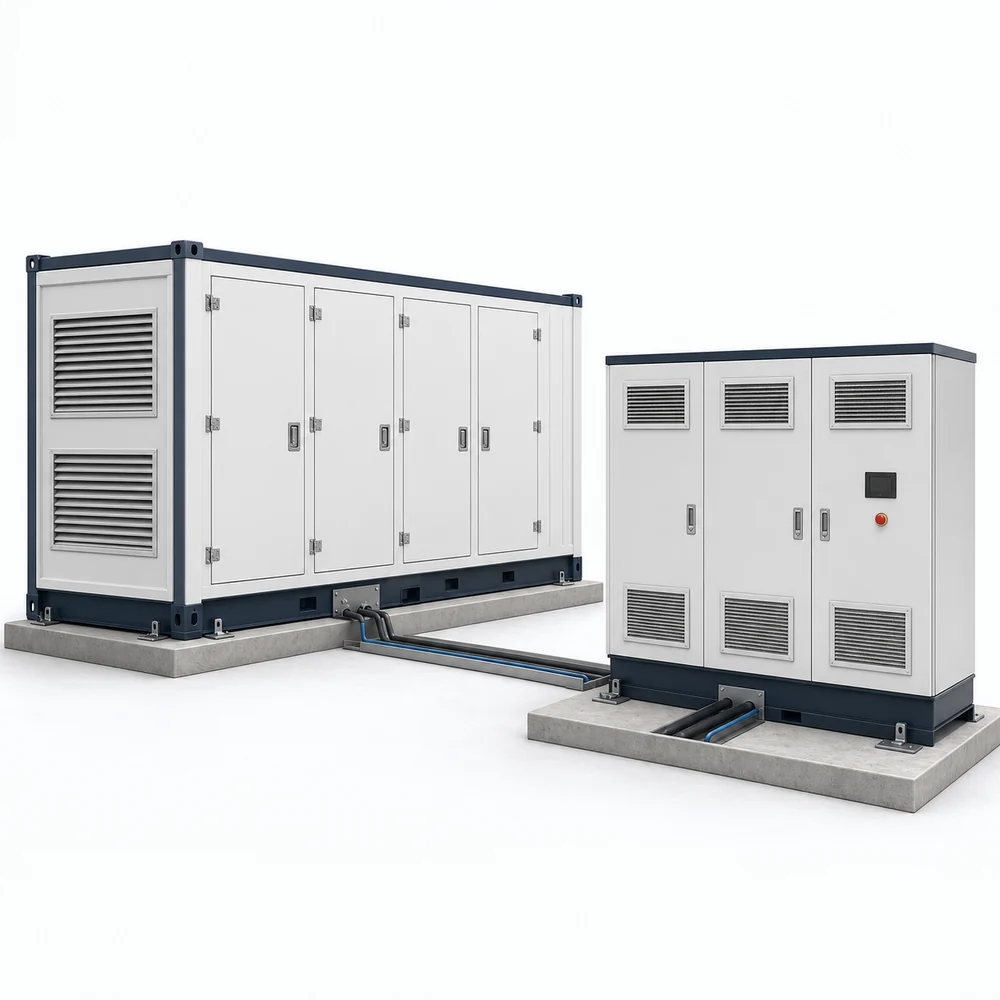
Battery and power-conversion layer
Usable energy, charge and discharge power, operating window, enclosure and thermal management confirmed from the time-series study and local rulesMoves available energy into the required charging window and supports only the peak, reserve and islanding roles defined by the project.
Storage scope confirmed in quote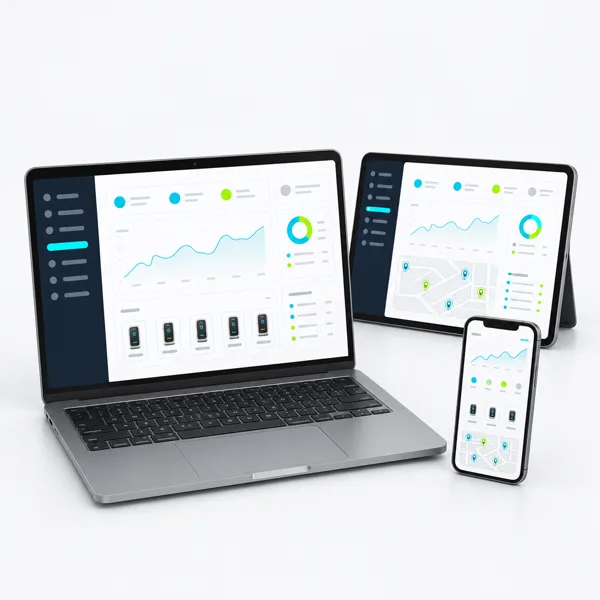
Microgrid energy controller
Metering, source dispatch, charging limits, protective devices, grid or generator coordination, islanding logic and restart sequence as applicableKeeps sources, storage, site loads and charging inside the approved operating state; it cannot create energy that the system does not have.
Control logic commissioned per site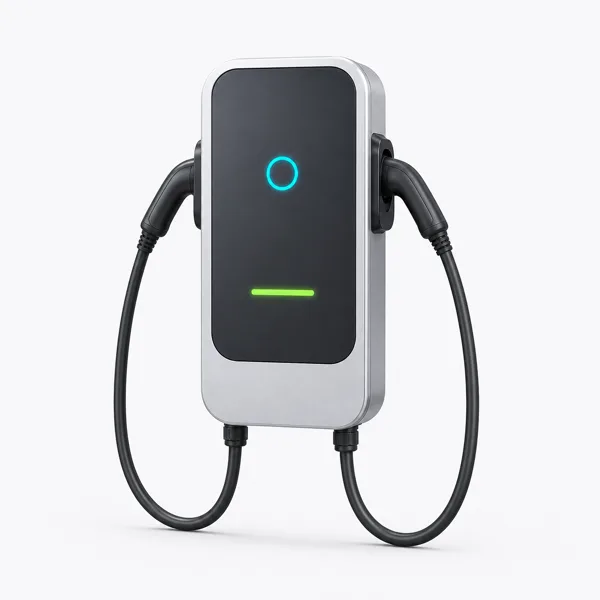
Charging matched to your vehicles and schedule
AC or DC roles, port count, connectors, delivered power, user access, communications, civil works, commissioning and maintenance confirmed for the siteMatches charging speed to vehicle energy and dwell without forcing a universal charger type onto every remote project.
Vehicle and market match required View matching product familyStart with the vehicle schedule, energy connection and site conditions.
Send what you have today—your site plan, parking or vehicle schedule and power data. We will show what EVBBC supplies and what your local installer completes.
- Country, coordinates, site ownership and target operating date
- Vehicle types, quantities, daily routes or duty, and expected energy per vehicle
- Arrival, departure, connection and simultaneous-charging windows
- Required departure readiness and which vehicles or loads are operationally critical
- Non-charging site loads, operating schedule and available load records
- Fully isolated, weak-grid or grid-connected backup operating objective
- Available utility, generator or other source data, outage history and operating restrictions
- Seasonal solar-resource information and known shading, wind, snow, heat, flood, dust or corrosion conditions
- Site plan showing land, roof or canopy options, parking, electrical areas and cable routes
- Candidate battery location, authority access, thermal and fire-safety requirements
- Target vehicle market, connectors, public or private access, payment needs and communications availability
- Requested equipment, civil, transport, installation, commissioning, training, maintenance and future-expansion scope
Answers before the project commits to PV, storage or chargers.
01 Is off-grid charging the same as adding solar to a grid-connected charger? +
No. A fully isolated system must balance local generation, storage, charging and other site loads without utility support. A grid-connected solar and storage site retains a utility relationship and requires a separate intentional-islanding design if selected charging must continue during an outage.
02 Can solar panels charge the vehicles directly? +
The project normally coordinates solar generation, power conversion, storage or other sources, site loads and EV charging through an electrical architecture and control system. A panel rating alone does not provide stable charger power across changing sunlight.
03 How much solar and battery capacity does the site need? +
There is no universal ratio. Size follows the vehicle-energy profile, charging windows, other loads, seasonal solar resource, allowed service limits, losses, battery operating window, reserve objective, temperature and any permitted backup source.
04 Should a remote site use AC or DC charging? +
Match charging power to the energy required before departure and the usable connection window. Longer dwell may support managed AC, while a short service window may justify a site-matched DC role only if generation, storage, conversion and thermal limits support it.
05 How long will the battery run the chargers? +
Runtime depends on usable stored energy, charger and other site loads, initial state of charge, temperature, reserve limits and power-conversion constraints. A battery nameplate alone does not establish usable charging time.
06 Can battery storage remove the need for a generator? +
We compare worst-season solar, battery reserve and recovery time, then show whether backup generation or restricted charging is needed.
07 Will the chargers keep working when the utility grid fails? +
Yes, when the design includes intentional islanding, protected loads and restart controls. We define which chargers remain available and how the backup system operates.
08 Can load management prevent the site from running out of energy? +
It can schedule or limit charging within configured power and energy limits. It cannot replace missing generation or storage, so the design also needs operating priorities, reserve rules and a response for low-energy conditions.
09 How is stationary battery safety handled? +
Battery technology, enclosure, thermal management, protection, spacing, fire testing or certification documents, emergency access, monitoring and response procedures are selected against the destination's adopted rules and authority check.
10 Can a remote site operate without reliable internet service? +
Core electrical controls and protection must follow the approved local operating design. Cellular, wired, satellite or intermittent remote monitoring, payment and support functions are confirmed from site connectivity and operator requirements.
11 What payback should an off-grid charging project expect? +
No fixed payback result applies. A commercial model requires local capital, freight, installation, maintenance, replacement, fuel or utility, solar resource, vehicle utilisation, energy pricing, payment and operating inputs before conservative, baseline and high-utilisation scenarios can be calculated.
12 What information produces the fastest useful quotation? +
Share the location, vehicles, daily energy and charging windows, other site loads, operating mode, available grid or backup information, solar and climate conditions, site plan, connector market and requested installation and service scope.
Off-grid energy, storage and charging resources
- U.S. DOE Alternative Fuels Data Center — Electric Vehicles for Fleets
- National Laboratory of the Rockies — EVI-EnSitePy: Electric Vehicle Infrastructure Energy Estimation and Site Optimization
- U.S. Department of Energy — Solar Integration: Distributed Energy Resources and Microgrids Basics
- U.S. DOE Federal Energy Management Program — Distributed Energy Interconnection Checklist
- U.S. DOE Federal Energy Management Program — Battery Energy Storage System Procurement Checklist
- UL Solutions — Energy Storage System Testing and Certification
Turn vehicle demand and site conditions into a practical energy plan.
Share the location, vehicle schedule, daily energy and operating mode. Add solar-resource, site-plan, grid, backup and safety information when available.