Choose charging speed by parking time—not by the biggest power number.
AC serves vehicles while they are parked. DC serves vehicles that must leave quickly. A practical site combines those needs inside one confirmed power ceiling.
Build my AC/DC charging plan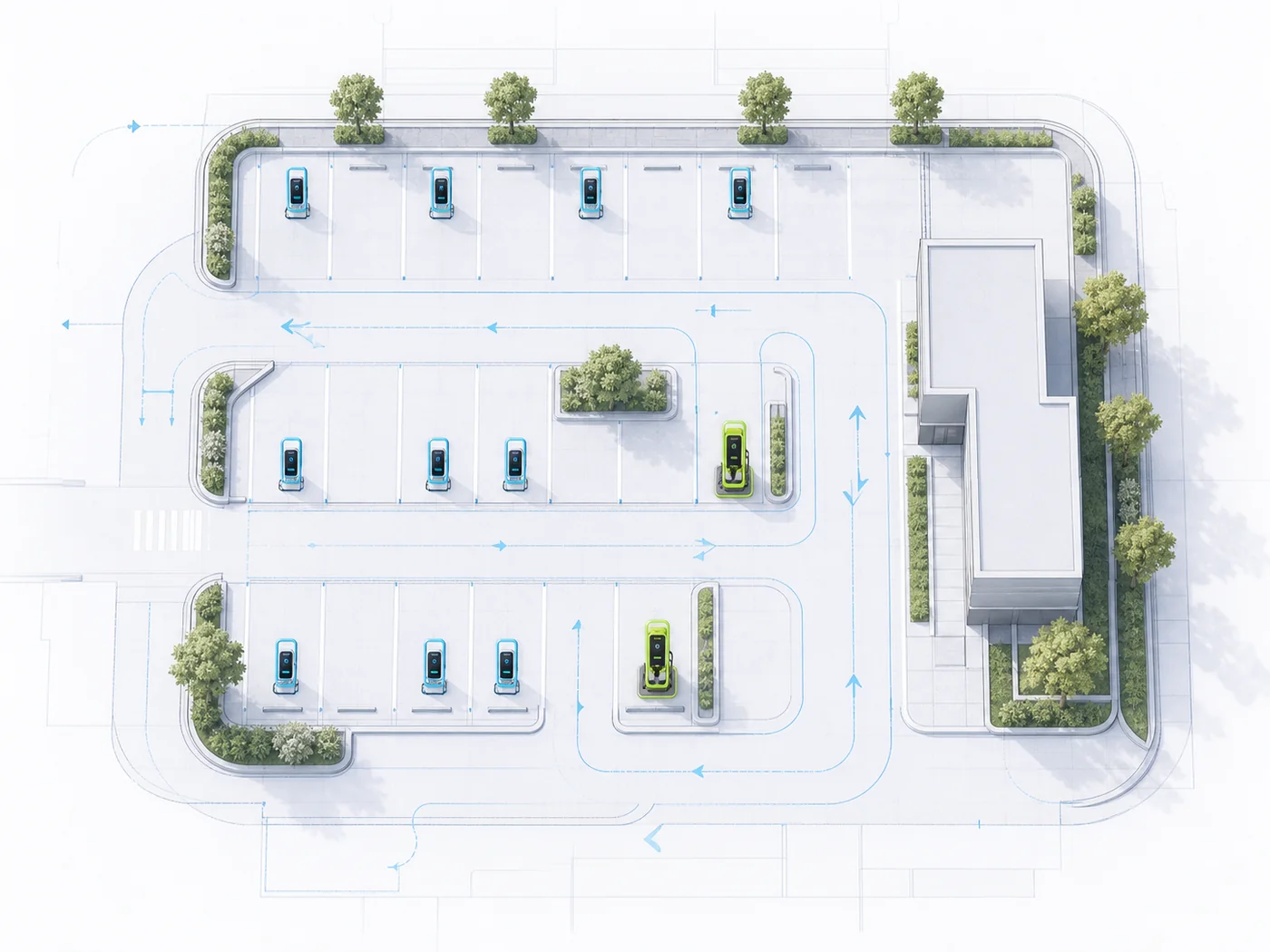
Longer parking windows reduce the average power needed.
Short turnaround makes higher power more valuable.
The number charging at the same time—not total spaces—sets the power need.
Use AC as the coverage layer and DC as the priority lane.
Do not begin with a fixed AC/DC percentage. Group vehicles by how long they park, how much energy they need and when they must leave. Then assign the lowest practical charging power to each group.
- 01
Longer-stay charging for guests, staff or overnight vehicles.
- 02
Faster charging for short visits or route-critical vehicles.
- 03
One site controller that keeps both groups inside the available power.
Build the mix from vehicle behaviour.
These steps explain why each charging layer is included before equipment quantities are fixed.
- 01
Group vehicles by dwell time
Separate overnight, all-day, one-to-two-hour and quick-stop vehicles.
- 02
Estimate energy per visit
Record how many kilowatt-hours each vehicle must add before departure.
- 03
Calculate average power needed
Divide the energy requirement by the available charging hours, then allow for real charging behaviour and losses.
- 04
Create an AC base and DC priority lane
Use AC where time is available and reserve DC for the vehicles that create real turnaround value.
- 05
Apply the site power ceiling
Coordinate simultaneous charging so the complete mix works within the confirmed building or grid limit.
Both are useful when each one has a clear job.
Charge while the vehicle is already parked
A cost-efficient coverage layer for hotels, offices, apartments and overnight fleet parking.
Add more energy during a short stop
A priority lane for public quick stops, fleet turnaround and other time-sensitive vehicles.
Turn parking time into the power each vehicle needs
This is a planning comparison, not a promised charging time. Vehicle acceptance rate, battery state, charging curve, losses and site limits change actual performance.
Let the operating pattern shape the equipment mix.
The same parking-space count can need a very different charging system when dwell time and departure pressure change.
Hotel or resort
- Parking pattern
- Guests stay overnight
- Practical starting point
- Start with AC coverage; study a compact DC option only where rapid guest top-ups have clear value.
- Confirm before ordering
- Guest access, parking duration and overnight building load.
Mall or office
- Parking pattern
- Short visits and all-day stays overlap
- Practical starting point
- Combine an AC base with a smaller DC lane for faster turnover.
- Confirm before ordering
- Visit duration, public fee model and property peak demand.
Return-to-base fleet
- Parking pattern
- Vehicles follow known shifts
- Practical starting point
- Use scheduled AC for long windows and DC for vehicles with the earliest route deadline.
- Confirm before ordering
- Route energy, arrival waves and departure priority.
Public or fuel-station site
- Parking pattern
- Drivers expect a short stop
- Practical starting point
- Give DC the central role, with power and vehicle acceptance checked before ratings are selected.
- Confirm before ordering
- Traffic, concurrency, connector market and utility capacity.
Four coordinated layers work better than a charger-only list.
Combine broad AC coverage, targeted DC charging, site power control and reporting in one coordinated package.
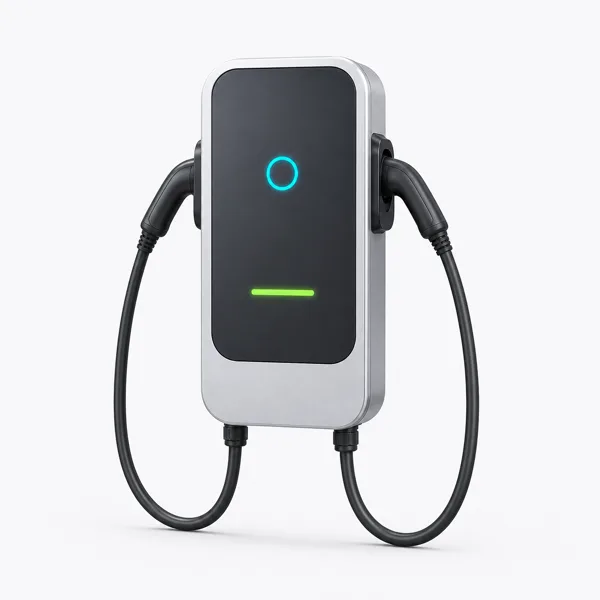
Longer-stay charging ports
7–22 kW class per port Specified in your quotationUses the natural parking window for broad, cost-efficient coverage.
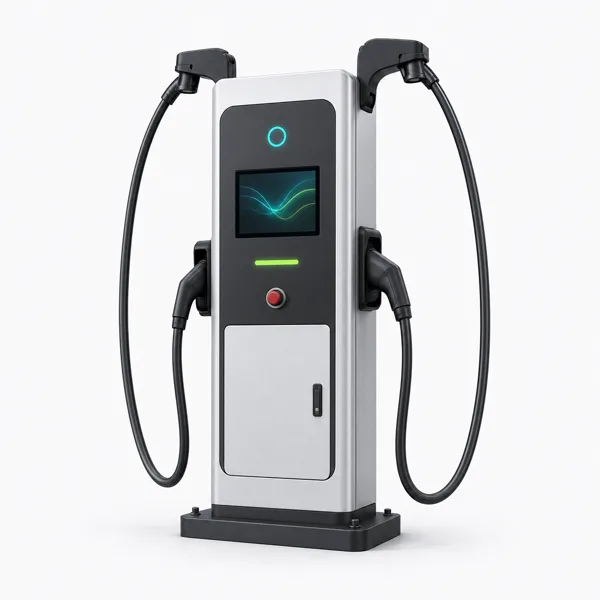
Fast-charge lane
Power selected by turnaround need Specified in your quotationServes short visits and route-critical vehicles without making every space high power.
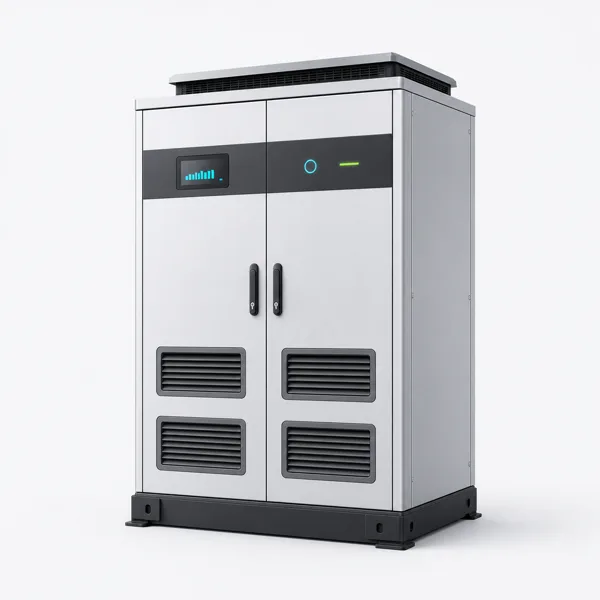
Anti-blackout site power controller
One shared AC + DC ceiling Site power protection optionCoordinates both charging layers inside the configured site limit.
Fee collection and live reporting
Access + status + session reports Specified in your quotationRuns public payment, guest access or fleet reporting from one operating layer.

Send the inputs that determine a useful AC/DC mix.
You do not need every item to start. More site data gives you a more accurate equipment and scope quotation.
- Site type and destination country
- Vehicle types and connector standards
- Typical arrival and departure times
- Energy needed per vehicle before departure
- Expected simultaneous arrivals
- Phase-one charging spaces
- Available site power or utility status
- Public payment, guest access or fleet reporting need
- Future expansion plan
- Target opening date
Answers before you fix power ratings and quantities.
01 Is DC charging always better because it is faster? +
No. Higher power is valuable when a vehicle must leave quickly. For vehicles parked for hours, AC can deliver the required energy with lower equipment and infrastructure demand.
02 Should every parking space have the same charger? +
Not necessarily. A mixed site can assign different charging jobs to longer-stay, quick-turn and priority vehicles.
03 Does a charger always deliver its nameplate power? +
Actual power also depends on the vehicle, battery state, charging curve, temperature and the site’s configured limit.
04 Can AC and DC chargers share one building power limit? +
Yes, when the system is designed with coordinated metering and site power control. The final limit and protection design remain project-specific.
05 How should a fleet choose between overnight AC and rapid DC? +
Compare each route’s energy requirement with the parked window. Use lower-power charging where the schedule allows it and reserve faster charging for the earliest or most demanding departures.
06 How do I plan for future expansion? +
Define the future space count early, then confirm spare distribution capacity, cable routes, civil provisions and the software’s expansion path during phase-one design.
Official standards and planning references
Build your first AC/DC charging blueprint in one minute.
Choose the site type, spaces, destination and vehicle connectors. The recommendation explains what each charging layer is for.