Plan the charging night backwards from the next departure.
Group vehicles by when they must leave, calculate the energy each group must recover, then schedule charging inside the site's verified power limit. Charger count comes after the operating plan.
Build my fleet charging brief
Vehicles that share a leave-by time are planned together.
Each group must recover its energy inside its usable connected window.
Allocate power by deadline while staying inside the available site limit.
A fleet is ready when every departure group receives its required energy before dispatch.
Do not size the depot from total vehicle count or maximum charger output alone. Use actual return times, next departures, arrival energy, route energy and the usable site power ceiling.
- 01
The energy fits the connected window and site limit: schedule managed overnight charging.
- 02
A smaller group has a short window: assess priority charging, a higher-power port or an operating swap for that group.
- 03
The group still misses its deadline: change the route, vehicle, charging window or electrical plan before ordering equipment.
Build the schedule before selecting charger quantities.
Build the overnight schedule first, then match chargers, power control and software to every departure deadline.
- 01
Group vehicles by departure
Record normal return time, plug-in time and next required departure. Vehicles with the same deadline become one planning group.
- 02
Measure the energy gap
Use representative routes or telematics to estimate arrival energy and the energy required for the next duty cycle, including relevant weather, terrain, cargo and auxiliary loads.
- 03
Calculate the group power
Divide the plug-side energy required by the usable connected hours. Repeat for every departure group instead of averaging the whole fleet.
- 04
Fit groups inside site power
Place the groups on the building load profile, enforce the verified charging ceiling and prioritize vehicles by departure need.
- 05
Test exceptions before finalising the plan
Model late returns, low arrival charge, unavailable ports, changed routes and missed plug-ins, then pilot and compare actual charging records with the plan.
The night is a timetable, not one long charging session.
Vehicles that share a leave-by time
Plan each group around the energy it needs and the hours it is actually connected before dispatch.
A traffic controller for site power
It changes charging time or power according to vehicle need, building load and the site's confirmed power ceiling.
Calculate one departure group at a time.
Exclude time before plug-in, after departure, during maintenance or when access is blocked. Final power must also match the vehicles, chargers and verified site limit.
Different departure times need different charging rules.
Choose the row closest to your fleet, then confirm the missing vehicle and site data.
Predictable overnight return
- Operating window
- Vehicles return reliably and remain parked until the next shift.
- Planning approach
- Use the full connected window and sequence charging inside the site power ceiling.
- Confirm before design
- Arrival energy, next-route requirement, real plug-in time and vehicle AC acceptance.
Staggered returns and departures
- Operating window
- Vehicles enter and leave in several waves rather than one common shift.
- Planning approach
- Create separate departure groups and recalculate the available power as each group arrives or leaves.
- Confirm before design
- Route roster, changing building load, port occupancy and scheduling-system inputs.
Short turnaround group
- Operating window
- A smaller set returns late, runs a second shift or has little recovery time.
- Planning approach
- Assess targeted higher-power charging or an operating reassignment for only that constrained group.
- Confirm before design
- Vehicle DC acceptance, connector, dwell time, cable reach, site demand and fallback vehicle.
Heavy tractor or specialist duty
- Operating window
- Large traction batteries, trailer geometry, cable handling or very short truck turnarounds dominate.
- Planning approach
- Use the heavy-truck depot plan for tractor and trailer movement, high-energy demand and specialist cable handling.
- Confirm before design
- Vehicle inlet and acceptance, tractor and trailer circulation, safety zones, cable handling and utility study.
Four layers turn the overnight plan into an operating depot.
Combine parking coverage, priority recovery, power control and fleet monitoring around every departure deadline.
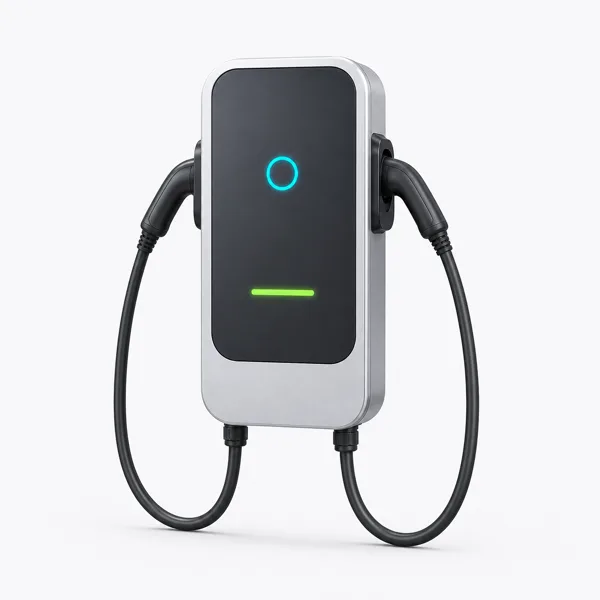
Overnight charging points
Parking coverage + vehicle-compatible power Specified in your quotationKeep vehicles connected for the hours available so managed charging has enough flexibility to meet departure groups.
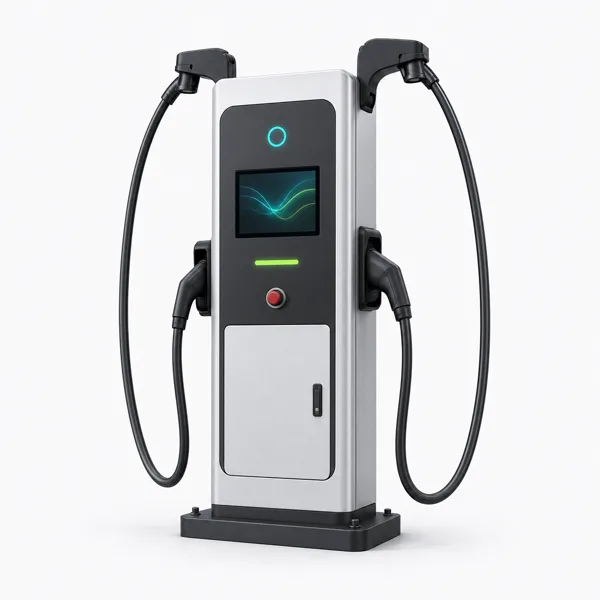
Priority recovery charging
Selected DC ports + short-window vehicles Specified in your quotationAdds targeted recovery for vehicles whose required energy does not fit a longer lower-power window; it is not a fixed fleet-wide ratio.
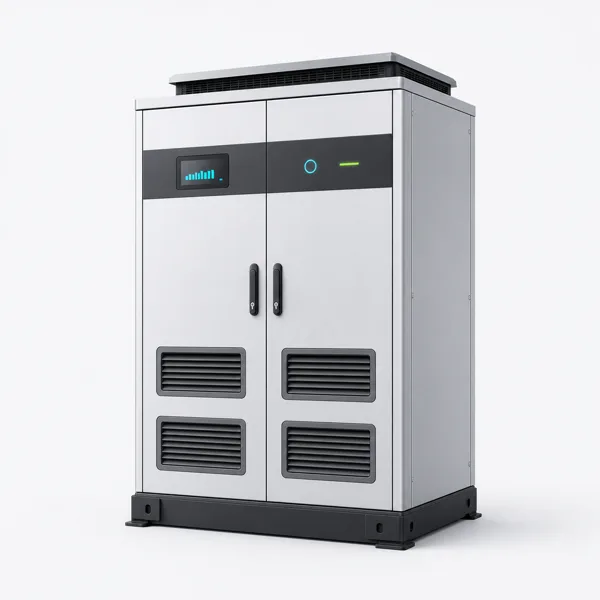
Site power control
Power ceiling + deadline priority Specified in your quotationCoordinates charging with the building load and distributes available power according to the approved operating rules.
Fleet charging operations layer
Vehicle status + schedules + exceptions Specified in your quotationShows charging progress, departure readiness and exceptions so staff can act before a vehicle misses dispatch.

Send the data that decides whether the night works.
You do not need every item to start. More site data gives you a more accurate equipment and scope quotation.
- Phase-one and future vehicle count by class and model
- Vehicle inlet, OEM AC and DC charge-acceptance information
- Representative routes, distance, energy use and telematics if available
- Normal and latest return time for each vehicle group
- Required departure time and target departure energy for each group
- Arrival state of charge or plug-side energy normally added
- Weather, terrain, cargo and auxiliary-load conditions that change energy use
- Late returns, second shifts, emergency vehicles and other exceptions
- Parking plan, assigned bays, connector reach and vehicle circulation
- Verified site power, voltage, building load profile and single-line diagram
- Utility tariff, demand-charge periods and any supply constraints
- Network coverage, software integration, fallback operation and expansion plan
Answers before you finalise the overnight charging schedule.
01 How do I know whether my fleet can finish charging overnight? +
For each departure group, calculate the plug-side energy required and divide it by the usable connected hours. Then test the time-based charging schedule against vehicle limits, port availability, building load and the available site power ceiling.
02 Does every fleet vehicle need its own charger? +
Not as a universal rule. Dedicated lower-power ports may suit vehicles parked for long periods, while shared higher-power ports may serve selected short-window vehicles. Parking access, connector reach, duty cycle and failure coverage decide the final count.
03 When is AC charging appropriate for a fleet? +
AC is a practical starting point when the vehicle's required energy fits the connected parking window and its onboard charger accepts the planned power. The vehicle model and project electrical data must confirm the result.
04 When should a fleet consider DC charging? +
Assess DC for vehicles with a short turnaround, in-shift recovery need or an energy gap that does not fit the usable AC window. Confirm the vehicle's DC acceptance, connector, site power and operating need before selection.
05 Can managed charging avoid a transformer upgrade? +
Managed charging can reduce simultaneous charging demand and may defer some upgrades at suitable sites. It does not prove that existing electrical service is sufficient; the building load, service equipment and utility requirements still need check.
06 How should vehicles be prioritized when site power is limited? +
A project can prioritize earlier departures, larger remaining energy gaps or mission-critical vehicles under agreed operating rules. The schedule should be commissioned against real route and charging data.
07 What happens when a vehicle returns late or a port is unavailable? +
The operating plan should define exception alerts, priority reassignment, spare capacity and a fallback vehicle or charging path. The appropriate reserve depends on the fleet's service requirement and accepted downtime risk.
08 Is this the same as planning a heavy-truck charging depot? +
No. Overnight planning suits mixed return-to-base fleets with overnight or between-shift charging windows. Use the heavy-truck depot plan for tractor and trailer geometry, specialist high-power connections, very high energy demand or cable handling.
Official standards and planning references
- U.S. Department of Energy AFDC — Electric vehicles for fleets
- U.S. Department of Energy FEMP — Managed EV charging for federal fleets
- U.S. Department of Energy FEMP — Smart charge management implementation
- U.S. Department of Energy FEMP — Smart charge management applications and benefits
- U.S. Department of Energy FEMP — Telematics for federal fleets
- National Laboratory of the Rockies — EVI-EnSitePy
Build the charging brief from your fleet schedule.
Send the schedule with your inquiry so charger power and site control can be matched to each departure group.