V2G30: 30 kW bidirectional EV charger.
Use one cabinet to charge a compatible EV and return energy to a planned site load. Send the vehicle, destination and site-power details for a matched configuration.
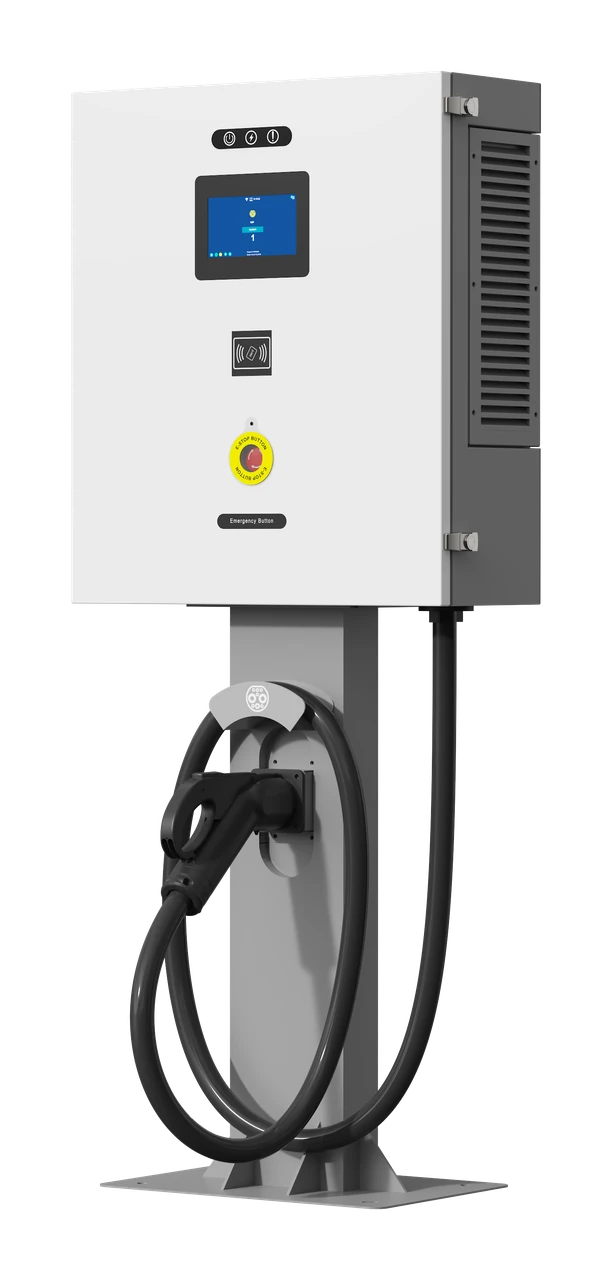
Best for fleets and sites testing controlled energy return from a compatible EV.
Use V2G30 when charging and controlled discharge need to be considered together. Vehicle support, site protection and local grid rules must all match before operation.
Fleet energy pilots
Test one return-to-base vehicle and one operating schedule before planning a larger fleet rollout.
Buildings and microgrids
Connect charging to the site's protection, metering, power limits and energy-control plan.
Controlled demonstrations
Match the vehicle, connector, software and permitted energy flow for a defined pilot.
Check the electrical range against your vehicle and site.
These values support the first fit check. The usable charging or discharge point still depends on the named vehicle, site connection and operating settings.
- Bidirectional power
- 30 kW bidirectional Final charging and discharge limits are matched to the vehicle and site.
- Vehicle-side DC range
- 150–750 V DC The vehicle must operate within the usable voltage range.
- Vehicle-side current
- Up to 100 A Actual current depends on vehicle voltage and control limits.
- Site AC voltage range
- 260–485 V AC The connection point, protection and wiring are checked for the site.
- Site frequency range
- 45–65 Hz The selected configuration must match the destination supply.
- Power factor
- ≥0.99 Stated for 50%–100% output at nominal input conditions.
- Current distortion
- ≤5% Stated for 50%–100% full-load output.
- Conversion efficiency
- >94.5% Stated at 750 V DC and 50%–100% load-current conditions.
- Operating temperature
- −30°C to +45°C Heat, altitude and enclosure conditions may change the usable output.
- Enclosure protection
- IP54 listed for this model We match the supplied enclosure and installation conditions to the site details you send.
Reserve space for the cabinet, cables and service access.
Use the enclosure dimensions for an early layout. The final drawing also needs cable reach, airflow, foundation, working clearance and maintenance access.
Cabinet dimensions only. Final clearances and cable routes depend on the installation site.
Start with the destination and the exact vehicle.
We verify connector shape, bidirectional communication, vehicle software, charger settings and destination requirements together.
| Destination path | Connector choices | What to send us |
|---|---|---|
| Europe projects | CCS2 | Send the vehicle and destination details. We check CCS2 communication, charger settings and local connection requirements. |
| North America projects | CCS1 · NACS DC | Send the vehicle and destination details. We check CCS1 or NACS DC, communication and site connection requirements. |
| China and selected markets | GB/T DC | Send the vehicle and destination details. We check GB/T DC communication, charger settings and local requirements. |
| Selected CHAdeMO projects | CHAdeMO | Send the exact vehicle and destination. We check whether the required CHAdeMO charging and discharge functions are supported. |
Send the country, vehicle make, model, year, inlet photo and bidirectional function details. We use the details you send to match the connector and supported operating path.
See the cabinet shape and front interface before planning the site.
Use these renders to discuss cabinet position, access and cable direction.
Use these product renders to plan cabinet position and cable direction. We use the details you send to match the supplied connector and cabinet details.
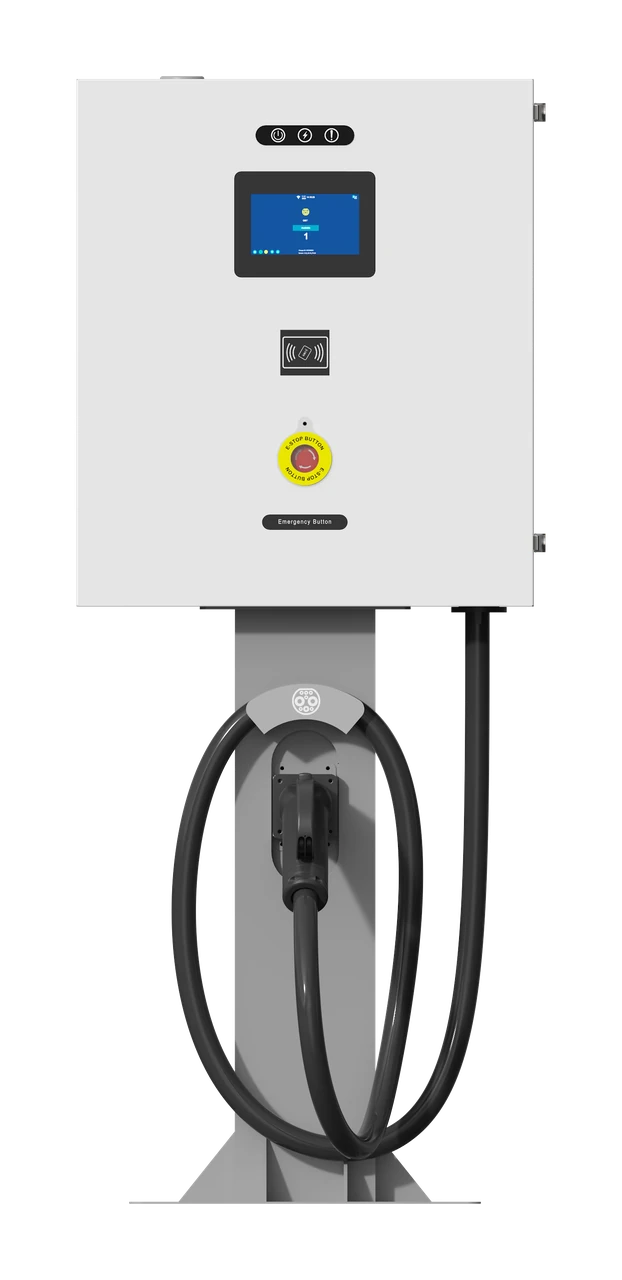
Match the document set to the destination and selected configuration.
The product data names several technical references. Send the destination so we can identify the reports, marks and local checks needed for the selected configuration.
Applies to
Destination country and selected V2G30 configuration
Documents and standards for your destination
GB/T 18487.1-2015 · GB/T 20234.1-2015 · GB/T 20234.3-2015 · NB/T 33001-2018 · GB/T 34120-2017 · GB/T 36548-2018
What your project package covers
The document plan covers available reports and marks, model coverage, connector, vehicle path and the destination approval route.
Combine the charger with site power, controls, software and delivery.
A working bidirectional project needs more than one cabinet. The proposal should show how every layer connects and who supplies each part.
- 01 Charger
Match the V2G30 configuration
Choose the connector, cable, vehicle voltage range and cabinet configuration for the named vehicle.
- 02 Site power
Plan protection and power limits
Check the connection, protection, metering, import and export limits, and the site-energy controller.
- 03 Operations
Define monitoring and control
Choose user access, commands, data, reports and any connection to the site's operating platform.
- 04 Delivery
Agree installation and handover
List drawings, packing, installation roles, testing, training, documents and support in the order.
Know exactly what is included before placing the order.
Your project package brings the selected charger, delivery terms, warranty and support into one written package.
Charger configuration
Selected model, connector, cable, vehicle path, controls, software and document list.
Packing and delivery
Production schedule, packing, Incoterm, named handover point and responsibility at destination.
Warranty
Start date, duration, covered parts, operating conditions, exclusions and remedy process.
Spares and support
Spare parts, remote diagnosis, response route, training and any on-site service included.
Send six details for a useful V2G30 quotation.
One real vehicle and one real site are enough to start the matching process.
- Destination country and installation address
- Vehicle make, model, year, inlet and bidirectional functions
- Vehicle battery-voltage range and current limits
- Site single-line diagram, voltage, frequency and available capacity
- Intended charging and discharge schedule
- Required utility, installation, testing and handover documents
Check basic fit, then match V2G30 to your vehicle and site.
Use the specifications shown here to check basic fit. Send the vehicle and site details for the exact configuration.
Check basic product fit
Model identity, 30 kW class, cabinet dimensions, electrical ranges and product views are shown on this page.
Match the charger to your vehicle and site
Connector, communication, site connection, documents, delivery, warranty and support are listed in writing.
Common questions before choosing V2G30.
01 Will V2G30 work with my vehicle?
Send the vehicle make, model, year, inlet and bidirectional function details. The connector, communication, vehicle software and electrical range must all match.
02 Can it return energy to a building or the grid?
That depends on vehicle support, site protection, metering, controls and local interconnection rules. We match those items to the intended energy-flow path before quoting.
03 Why is the vehicle-side voltage range important?
The charger and vehicle must share a usable voltage and current point. The vehicle may limit charging or discharge below the cabinet maximum.
04 Is IP54 confirmed for every installation?
IP54 is listed in the product data. Ask for the applicable enclosure documents, model coverage and installation conditions for your destination.
05 Are the images customer installation photos?
These product renders show the cabinet form and interface position. Request the exact project drawing and supplied configuration for installation planning.
06 What site information is needed for a quotation?
Send the destination, vehicle details, single-line diagram, voltage, available capacity, planned energy-flow schedule and required local documents.
07 Can software and site-power control be included?
Yes. Tell us the access, monitoring, reporting, power-limit and integration functions needed so they can be listed as one package.
08 What does the project package cover?
It lists the selected charger, connector, controls, documents, price, availability, packing, delivery, warranty and support for the project.
Check the vehicle, site power and operating schedule next.
Get a V2G30 configuration for your vehicle and site.
Send the destination, vehicle, site-power data and intended charging and discharge schedule.
Your project package covers vehicle fit, connector, controls, documents, delivery, warranty and support.Request price and availability
Your selected product is attached automatically. Add only what you already know.