Match the connector to the vehicles and destination market.
There is no single plug for every project. First separate AC from DC, then check the vehicle inlet, destination rules, existing fleet and number of ports that must work at the same time.
Build my connector plan
A market may use different connector families for each charging job.
The charger cable must fit the vehicles the site will actually serve.
A cabinet, port and connector are not the same quantity.
Choose by market, vehicle and charging type—not by plug popularity.
Europe commonly plans around Type 2 AC and CCS2 DC; North America is a mixed transition market; China uses GB/T families; CHAdeMO remains relevant where the compatible vehicle base requires it. Every order still needs a project-specific vehicle and local-compliance check.
- 01
Which vehicle inlets must the site serve on opening day?
- 02
Which AC and DC connector families fit the destination market?
- 03
How many ports must charge simultaneously, and how is power shared?
Lock the vehicle-side match before releasing equipment.
These checks prevent the common mistake of ordering the right charger power with the wrong cable or port layout.
- 01
List the destination market
Record the country, city and whether the site is public, private, hotel, fleet or mixed use.
- 02
List actual vehicle inlets
Use vehicle makes, model years and inlet photos when the fleet is mixed or the market is changing.
- 03
Separate AC from DC
Choose the longer-stay AC connection and the rapid DC connection as two different decisions.
- 04
Count simultaneous ports
Confirm how many vehicles can charge at once—not just how many cables are attached to one cabinet.
- 05
Confirm local compliance
Check connector, electrical, accessibility, metering and certification requirements for the destination project.
Keep the vehicle side and charger side clear.
The opening built into the vehicle
This determines which charging connector can be inserted directly into that vehicle.
The plug at the end of the charger cable
The connector must match the inlet, charging type and project-standard requirements.
Five details prevent the wrong connector from being ordered
Do not use this example as a universal market rule. Existing vehicles, adapters, public-infrastructure requirements and transition plans must be checked for the real destination.
Start with the market standard, then verify the actual vehicles.
Use the destination as a starting point, then confirm every vehicle that must charge on opening day.
Europe
- Typical destination context
- Public or commercial passenger-vehicle charging in an IEC-based market
- Common planning pair
- Type 2 for AC and CCS2 for DC are the common planning starting point.
- Confirm before ordering
- Current local rules, public-access scope, vehicle inlets and required certification.
North America
- Typical destination context
- A mixed vehicle base during the CCS1, J1772 and SAE J3400 transition
- Common planning pair
- Plan from the opening-day fleet; one project may need J1772, CCS1 or SAE J3400 variants.
- Confirm before ordering
- Vehicle model years, network strategy, adapter policy and destination requirements.
Mainland China
- Typical destination context
- Vehicles and infrastructure built for the GB/T charging system
- Common planning pair
- Use the applicable GB/T AC and DC families for the confirmed vehicle base.
- Confirm before ordering
- Current GB/T version, vehicle compatibility, power class and local certification.
Japan or legacy mixed fleet
- Typical destination context
- Existing vehicles include CHAdeMO-compatible DC inlets or Type 1 AC inlets
- Common planning pair
- Keep the required legacy connector only where the vehicle list and operating case support it.
- Confirm before ordering
- Actual fleet count, replacement timeline, adapter policy and new-vehicle mix.
See the AC and DC options as two separate rows.
Send the vehicle list and destination. The quotation will show the available connector, cable rating and certification options for that project.
Longer-stay AC connector options
Used where the vehicle can remain parked while its onboard charger converts AC power.
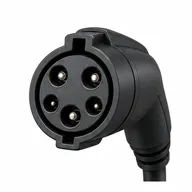
Type 1
- Typical planning market
- North America / Japan
- Information to send
- Vehicle inlet, onboard AC limit and destination requirements.
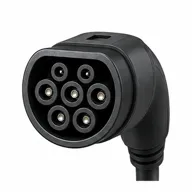
Type 2
- Typical planning market
- Europe / global
- Information to send
- Tethered or socket format, phases, current and local rules.
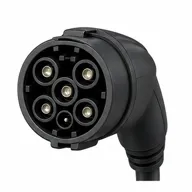
GB/T AC
- Typical planning market
- China
- Information to send
- Applicable GB/T version, vehicle inlet and power rating.
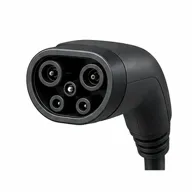
NACS AC
- Typical planning market
- North America
- Information to send
- Vehicle model year, AC configuration and project certification.
Rapid DC connector options
Used where the charger supplies controlled DC power directly to a compatible vehicle inlet.
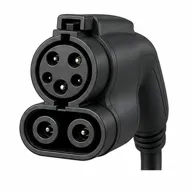
CCS1
- Typical planning market
- North America
- Information to send
- Opening-day vehicles, future fleet plan and simultaneous ports.
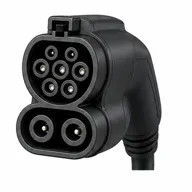
CCS2
- Typical planning market
- Europe / global
- Information to send
- Vehicle inlet, public-access requirements, cable rating and certification.
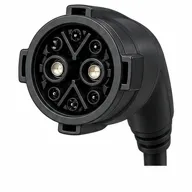
CHAdeMO
- Typical planning market
- Japan / legacy fleets
- Information to send
- Actual vehicle demand, protocol version and replacement horizon.
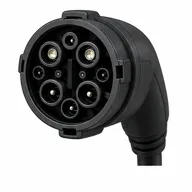
GB/T DC
- Typical planning market
- China
- Information to send
- Applicable standard version, communication, power class and vehicle inlet.
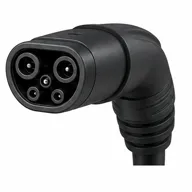
NACS DC
- Typical planning market
- North America
- Information to send
- Vehicle and network plan, adapter policy, cable rating and certification.
Four counts prevent connector mistakes.
Separate vehicles, working ports, cables and shared power so the supplied configuration matches how the site will operate.
Compatible inlet list
Make + model year + AC/DC inlet Specified in your quotationShows which vehicle families each supplied connector must serve instead of relying on a country label alone.
Simultaneously working ports
Vehicles charging at the same time Specified in your quotationSeparates real service capacity from the number of cables or cabinet doors.
Connector and cable variant
Standard + current + length + cooling Specified in your quotationDefines the physical interface and handling needs for the selected power and parking layout.
Shared power and control
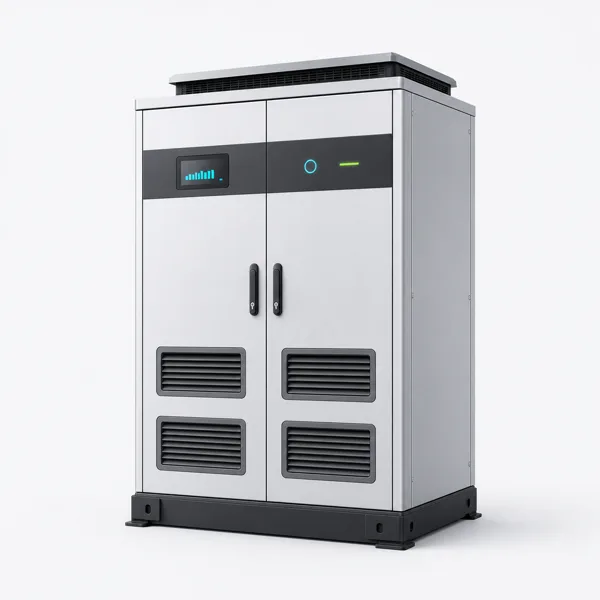
Cabinet output + port allocation Site power protection optionExplains how several connectors share power and whether they can operate at the same time.
Send the vehicle details behind the plug choice.
You do not need every item to start. More site data gives you a more accurate equipment and scope quotation.
- Destination country, city and public/private use
- Vehicle makes, models and model years
- Clear photos of the vehicle inlets, if available
- Number of vehicles by inlet type
- Required AC charging job
- Required DC charging job
- Number of simultaneously working ports
- Maximum vehicle AC and DC acceptance, if known
- Cable length and handling requirements
- Adapter policy for the site or fleet
- Phase-one and future vehicle mix
- Local certification and metering requirements
Answers before you finalise the connector list.
01 Is there one universal EV charging connector? +
No. Connector families vary by AC or DC use, destination market, vehicle inlet and installed fleet. A multi-market supplier should split the order by confirmed destination and vehicle need.
02 What is the difference between Type 2 and CCS2? +
Type 2 is the AC interface family. CCS2 combines the Type 2 upper section with additional DC contacts for rapid DC charging.
03 Is SAE J3400 the same as NACS? +
SAE J3400 standardizes the coupler commonly called NACS in North America and covers both AC single-phase and DC conductive charging requirements.
04 Should a North American project order only J3400 connectors? +
Not automatically. Check the opening-day vehicle base, model years, network strategy, public requirements and adapter policy before deciding whether J1772, CCS1, J3400 or a combination is needed.
05 Does two connectors mean two vehicles can charge at once? +
Not necessarily. Confirm the number of independently operating ports and how output is shared when more than one vehicle is connected.
06 Can adapters solve every compatibility problem? +
No. Adapter support depends on the vehicle, charging system, communication, power, certification and site policy. Treat adapters as a project-specific compatibility decision.
Official standards and planning references
Build a market-ready charging configuration in one minute.
Choose the destination, scenario, spaces and every vehicle connector the site must serve. The summary travels with your inquiry.