Public charging that works from parking space to payment.
Match charging speed to how long drivers stay, then connect site power, access, pricing, payment, wayfinding and maintenance as one operating system.
The package covers charging, power and public operation.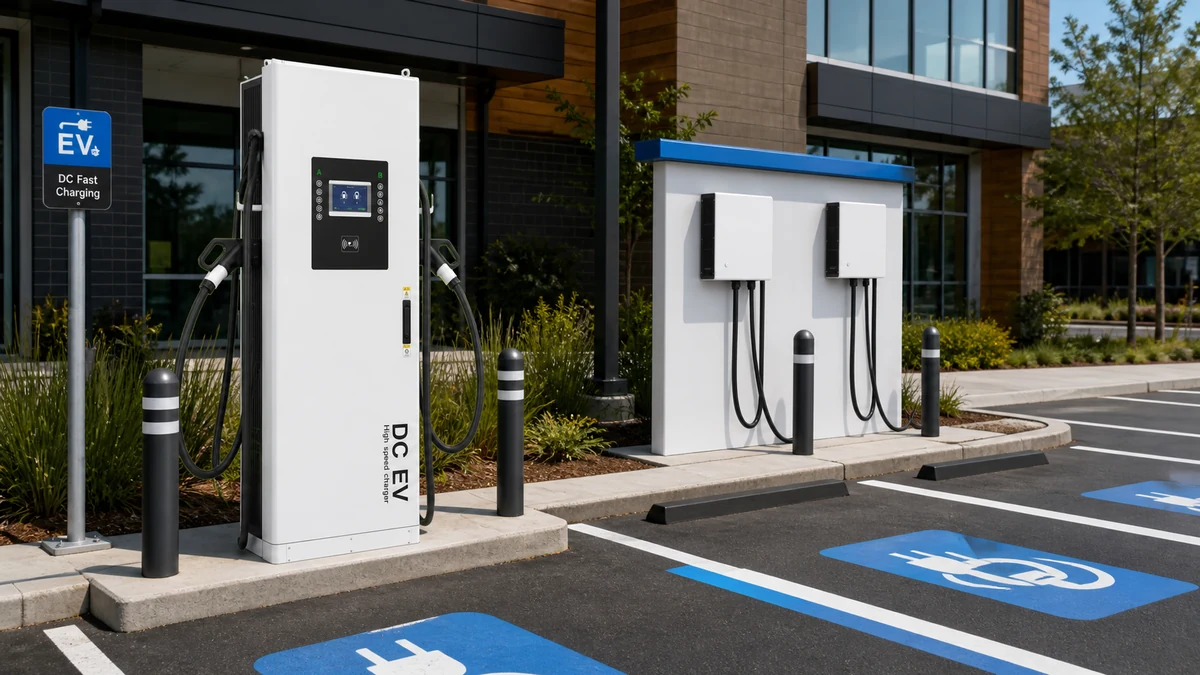
Short visits, long stays and repeat users need different charging roles.
Use speed where turnover needs it instead of oversizing every parking space.
A public station needs a clear user journey and an owner response path.
Design the driver journey and the electrical system together.
Start with how vehicles use the site, check available power, then choose the equipment and installation phases.
- 01
Map parking behaviour
Separate short visits, multi-hour stays, commuters, residents, staff and any fleet or reserved use.
- 02
Assign charging roles
Give AC spaces time to work and reserve DC for the users or turnover windows that need it.
- 03
Check site power
Check the existing peak, transformer and expansion path before treating every port as simultaneous load.
- 04
Design public access
Plan connector reach, accessible use, lighting, signage, protection, pricing and payment for the target market.
- 05
Plan daily operations
Define monitoring, fault response, maintenance ownership, uptime reporting and the trigger for adding capacity.
Two systems decide whether public charging feels simple.
One screen for prices, sessions, payments and fault alerts
The operator sees which ports are available, what drivers were charged and which station needs attention without visiting every bay.
A power traffic controller for the whole car park
When correctly configured and commissioned, the system can allocate available power across active sessions within a project-defined ceiling.
The right mix changes with the reason people park.
Use the row closest to your car park. We tailor the AC and DC mix to parking duration, expected demand, available power and the way you plan to operate the site.
| 05 — PARKING PATTERNS | Parking pattern | Practical starting point | Confirm before ordering |
|---|---|---|---|
| City parking garage | Drivers stay from one hour to most of a working day, often on several levels. | Broad AC destination coverage with selected DC bays near simple vehicle circulation. | Slab and cable routes, cellular signal, fire strategy, accessibility, payment and parking controls. |
| Retail public parking | Visits range from quick errands to longer shopping, dining or entertainment stays. | AC for longer visits plus a visible DC turnover zone where short stops are valuable. | Dwell-time data, peak trading hours, signage, pricing, overstaying rules and building load. |
| Park-and-ride | Vehicles remain for several hours with strong morning arrival and evening departure peaks. | Managed AC charging scheduled across the long dwell window with measured expansion. | Daily occupancy, commuter charging need, departure concentration, access control and tariff. |
| Public fast-charge zone | Drivers expect a short stop and charging turnover is the main purpose of the bay. | DC-focused bays with clear circulation, transparent payment and active service monitoring. | Vehicle mix, connector market, queue space, utility capacity, accessibility and fault-response scope. |
The package covers charging, power and public operation.
See how chargers, power control, software and installation fit together. Your quote shows exact quantities and included services.
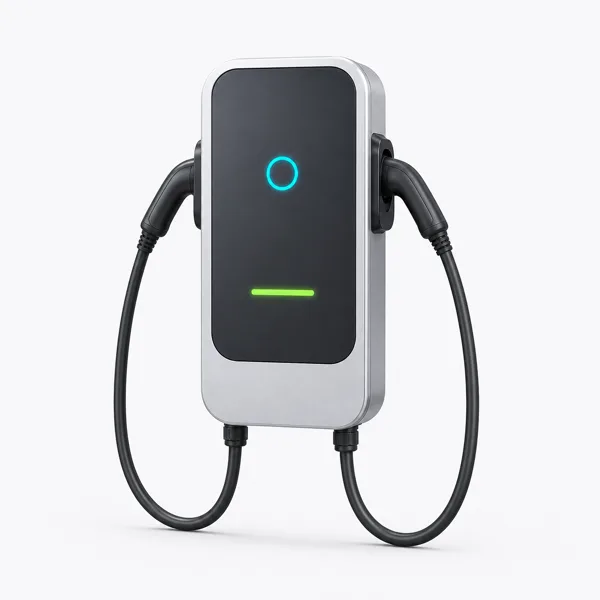
AC destination charging
Wallbox or pedestal form selected for the site and target vehiclesCovers more multi-hour parking spaces without paying for unnecessary fast-charging power at every bay.
Quantity confirmed by dwell data View matching product family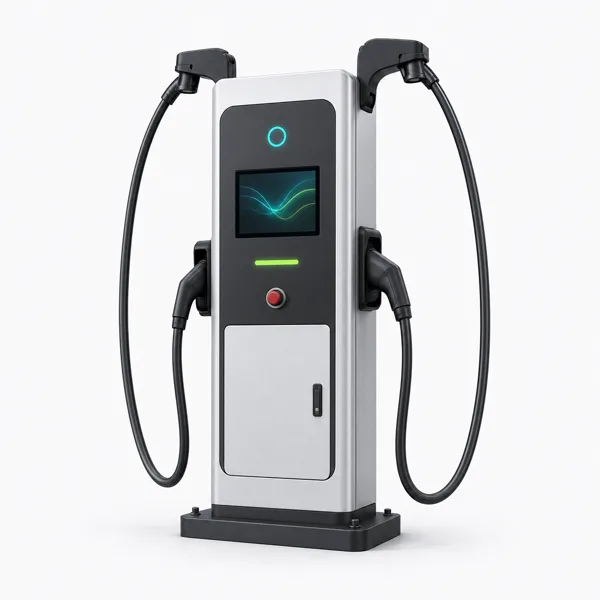
DC turnover charging
Power, connector and number of bays selected for the target marketServes drivers who need more energy during a short parking window and supports a distinct turnover zone.
Confirmed in site assessment View matching product family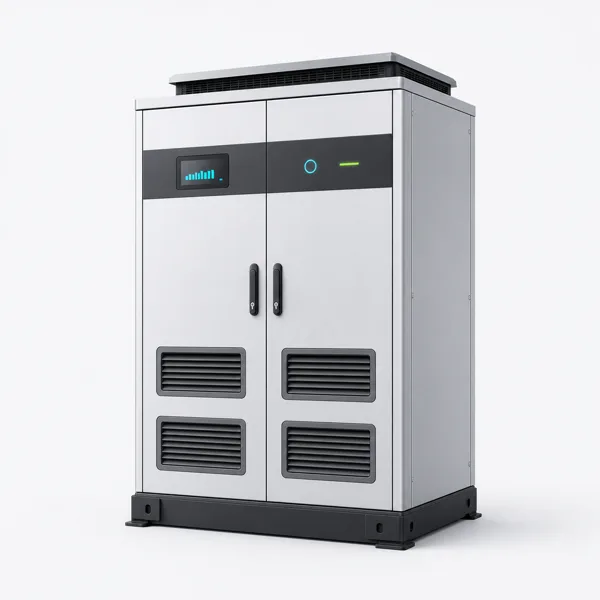
Car-park power controller
A project-defined total limit shared across active AC and DC sessionsCan allocate available power across active sessions within the project-defined ceiling and makes staged expansion easier to assess.
Configured and commissioned by project View matching product family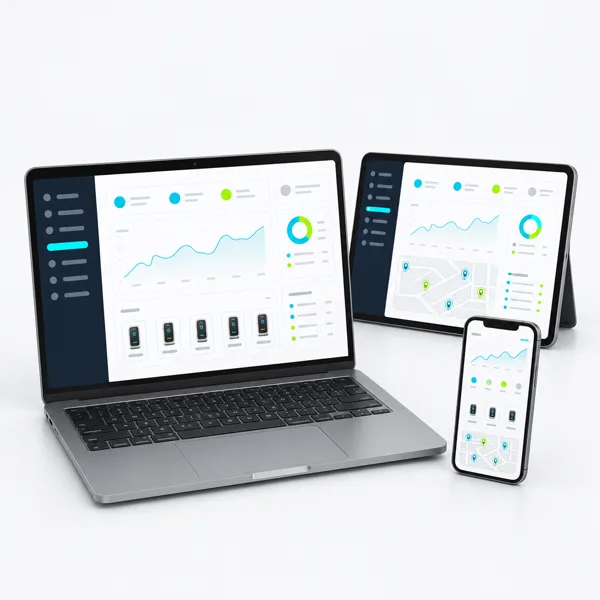
Payment and station dashboard
Access, pricing, payment, session records, availability and fault alertsGives drivers a clear start-and-pay path and gives the owner one place to manage daily performance.
Market scope confirmed in quote View matching product familyDescribe the parking operation before specifying the chargers.
Send what you have today—your site plan, parking or vehicle schedule and power data. We will show what EVBBC supplies and what your local installer completes.
- Country, city and parking-site type
- Total spaces and phase-one charging spaces
- Typical short, medium and long dwell times
- Peak occupancy and expected driver groups
- Target connector market and known vehicle mix
- Available utility, transformer or peak-load data
- Parking layout, levels and charger-to-panel routes
- Pricing, payment and access-control preference
- Local accessibility and approval path
- Maintenance owner, response target and expansion plan
Answers before you choose the AC and DC mix.
01 Should every public parking space have a fast charger? +
Usually no. Charger speed should follow parking duration, energy need, site power and the operating purpose of each zone. Long-stay spaces can often use lower-cost AC charging.
02 How do we decide the number of AC and DC ports? +
Use dwell-time groups, peak overlap, expected sessions, expansion plans and available site power. The result is a project-specific role mix rather than one fixed percentage.
03 Can drivers pay without joining an app? +
We configure the payment options required for your market, including card or contactless payment where supported.
04 What accessibility details must be planned? +
Consider the charging space, access route, cable reach, connector handling, controls, screen, payment and customer support. Local requirements and dimensions are confirmed for the destination.
05 How do we stop chargers from overloading the property? +
Set a site power ceiling and distribute the available capacity across active sessions. Existing peak load, transformer, tariff and planned expansion still need an electrical assessment.
06 What keeps a public station useful after opening? +
Clear ownership for monitoring, connectivity, payment support, inspections, preventive maintenance, fault response, spare parts and driver communication.
07 Do two connectors mean two vehicles can charge simultaneously? +
Not necessarily. Confirm the number of independent charging ports, the cabinet architecture and the power available to each port when more than one vehicle is connected.
08 What changes for an enclosed parking garage? +
Electrical, fire, ventilation, clearance, cable-routing, drainage and collision-protection requirements must be checked under the destination's local codes and site conditions.
Public-charging rules and operating resources
- Joint Office of Energy and Transportation — Public EV Charging Infrastructure Playbook
- U.S. Access Board — Design Recommendations for Accessible EV Charging Stations
- European Union — Consolidated Alternative Fuels Infrastructure Regulation
- European Commission — AFIR operating and payment questions
- Joint Office — Public EV charging site-selection checklist
- U.S. DOE Alternative Fuels Data Center — Charging procurement and installation
- U.S. DOE Alternative Fuels Data Center — Charging operation and maintenance
- Joint Office — Charging user experience and reliability
- Joint Office — Physical safety and security planning help sheet
Turn your parking pattern into a charging plan.
Share the site type, spaces, dwell-time groups and target market. Add drawings and power data when they are available.