20kW mobile V2V DC charger for roadside assistance.
Transfer energy from one compatible donor EV to another through a complete mobile DC charging unit. Send both vehicle records and the operating location so we can confirm the interfaces, voltage ranges and cable pair.
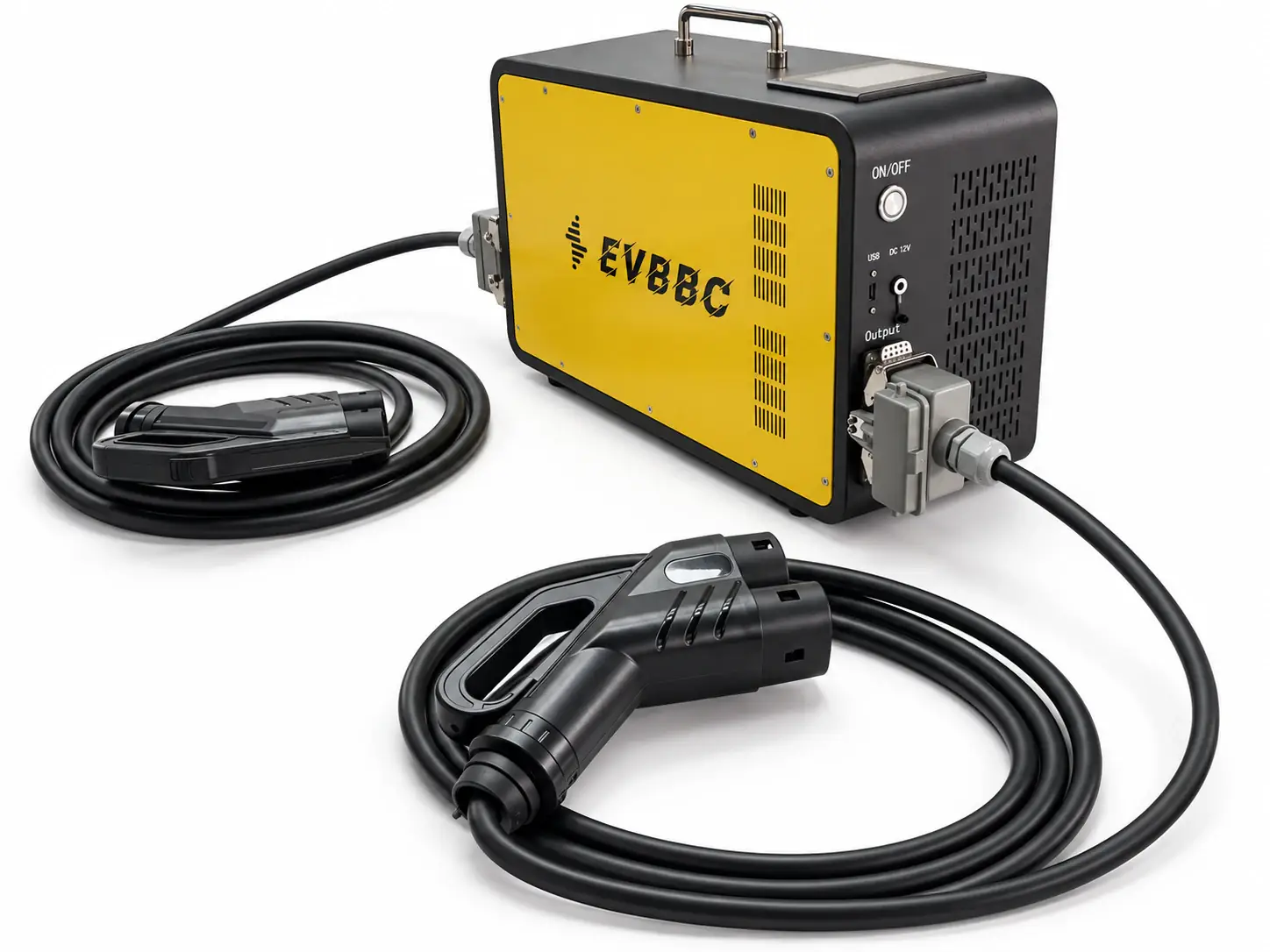
How does 20kW vehicle-to-vehicle charging work?
The V2V20 is a complete DC power-conversion charger with a donor-side cable and a receiving-vehicle cable. It transfers energy from a compatible donor EV to a compatible receiving EV. It is not only a charging cable and does not carry its own rescue battery.
The donor must support discharge and the receiving EV must accept DC charging. Confirm both vehicles, their electrical ranges, communication and the cable pair. The 20kW rating is not a promise of the power or charging time achieved by every vehicle pair.
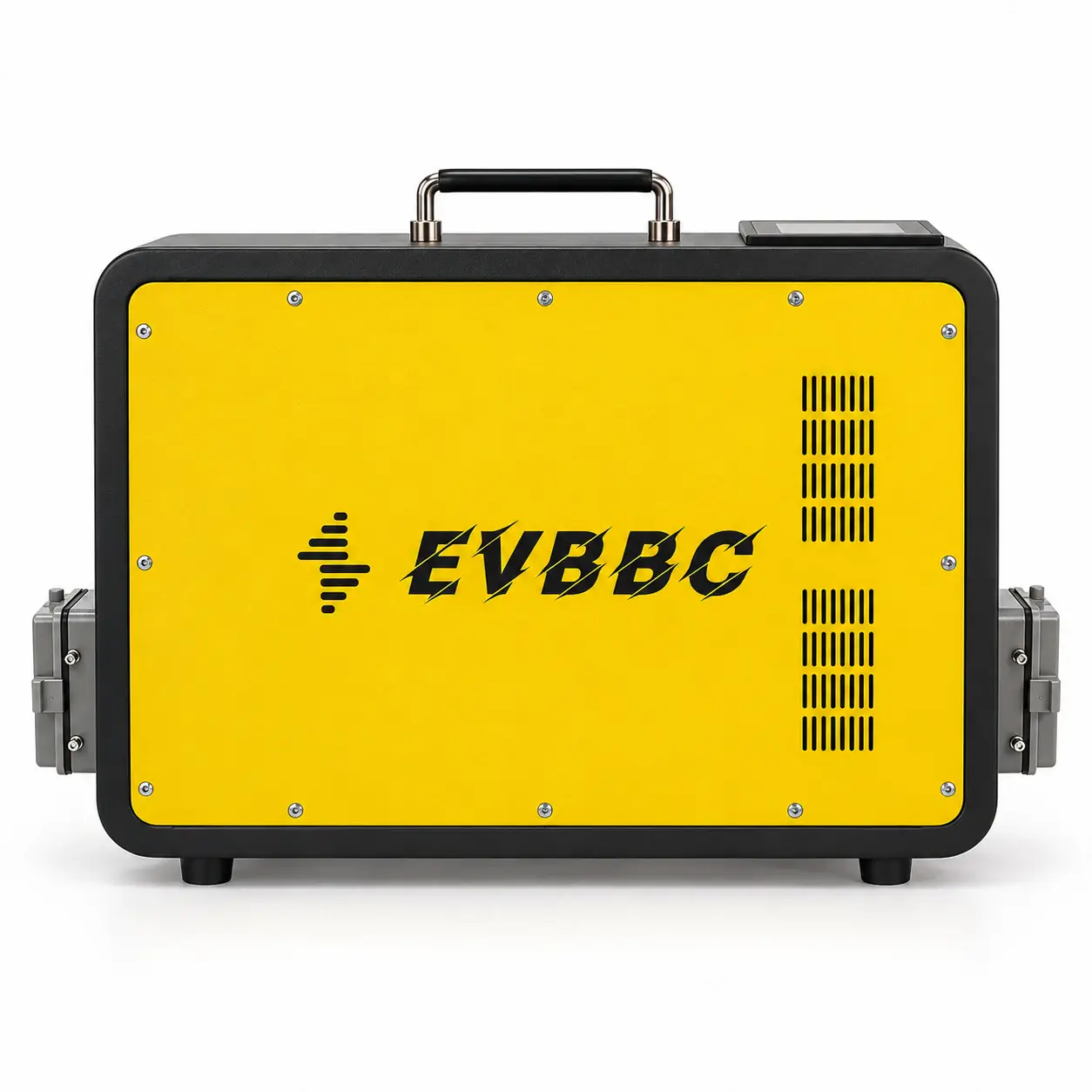
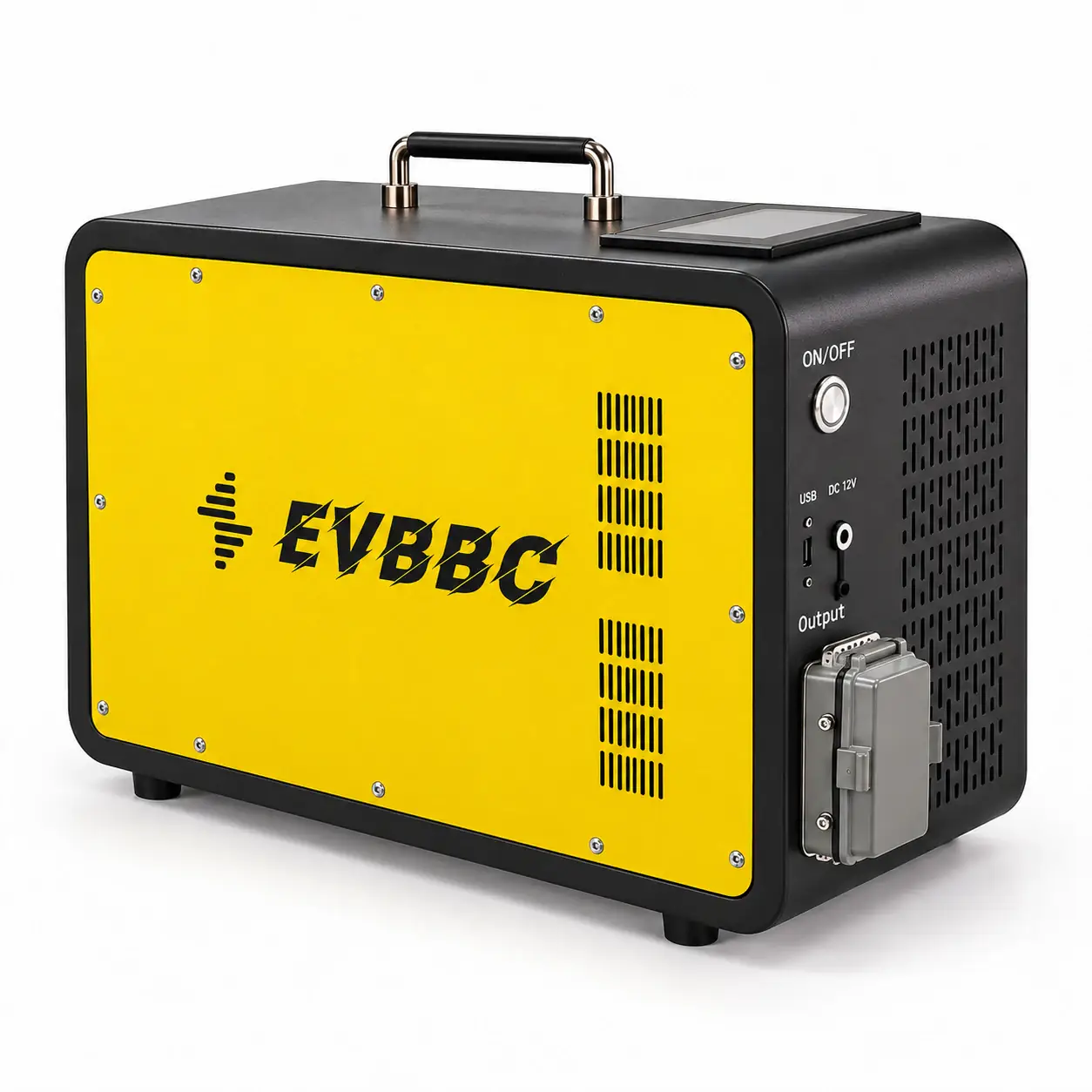
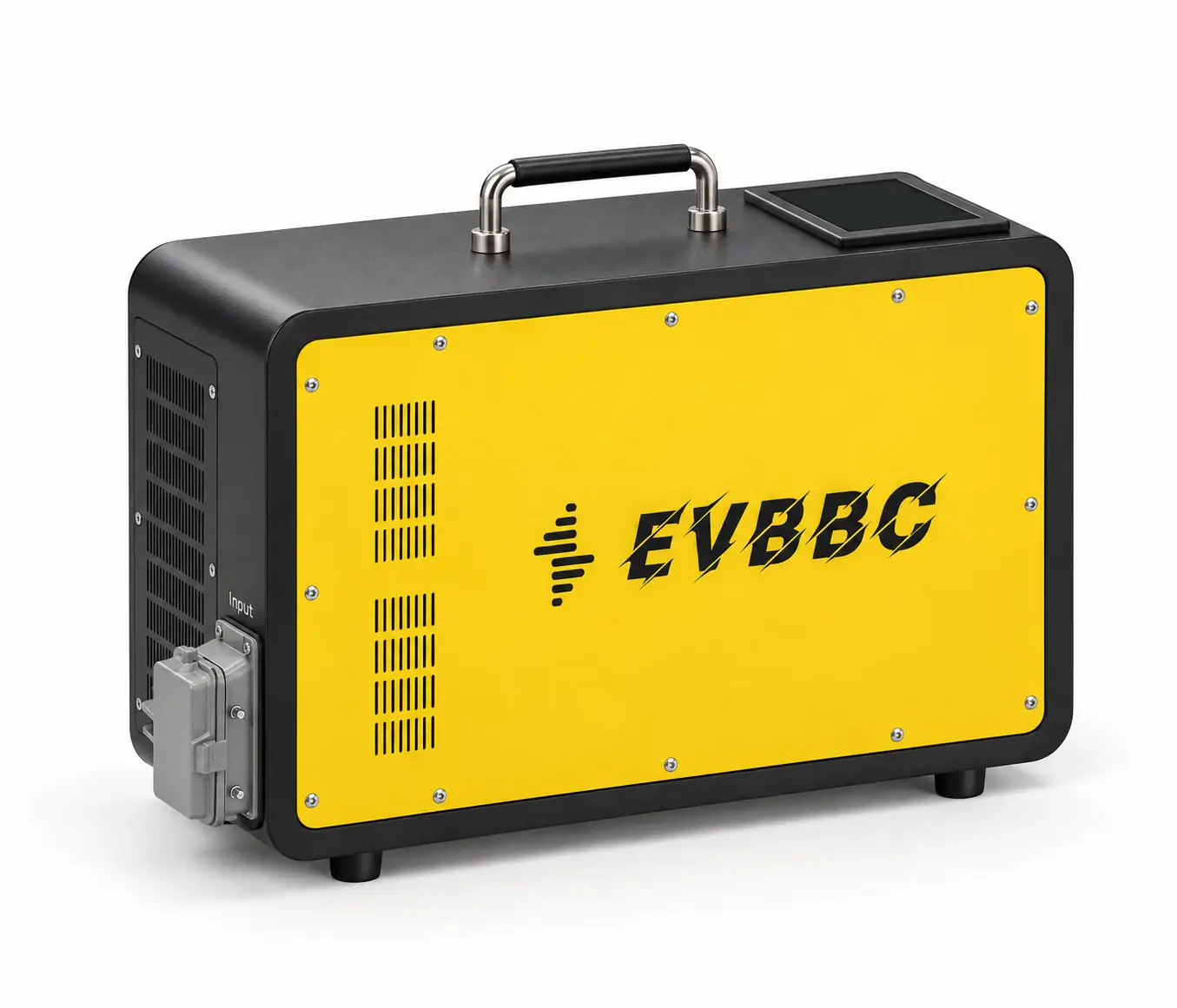
A closer look at the unit
How vehicle-to-vehicle charging works
Energy travels from the donor vehicle, through the V2V charger, to the receiving vehicle.
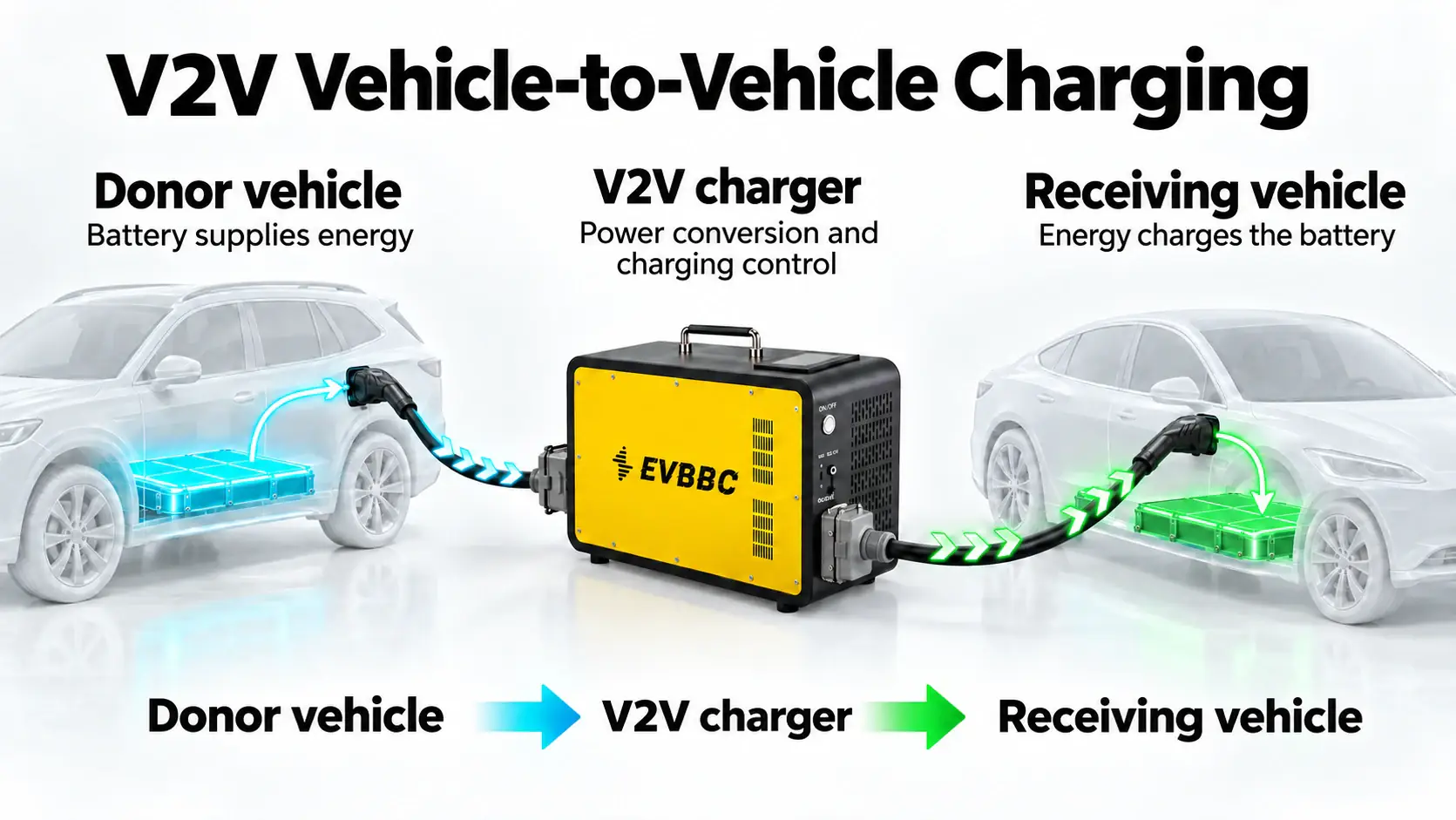
Vehicle-to-vehicle charging scenarios
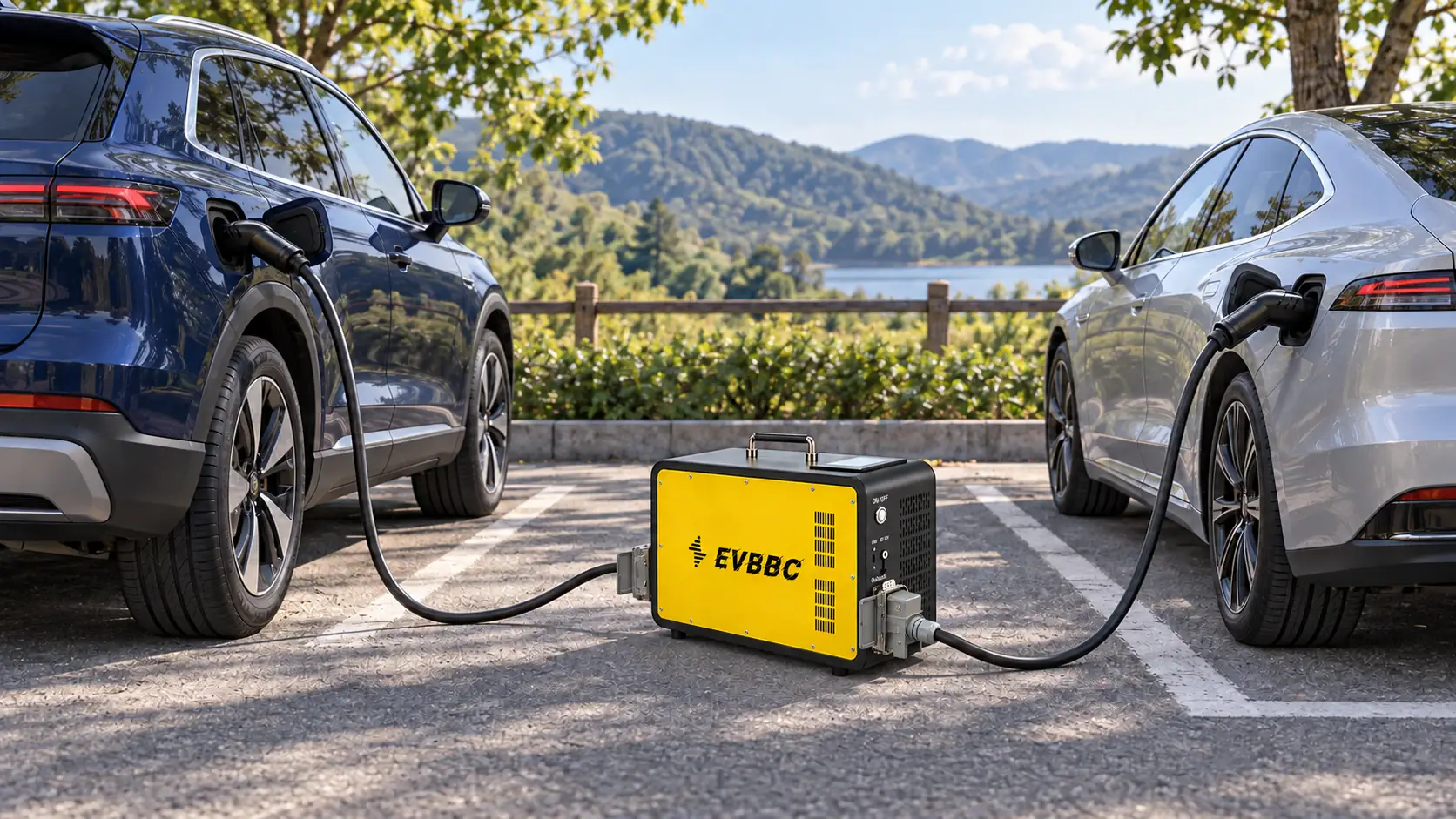
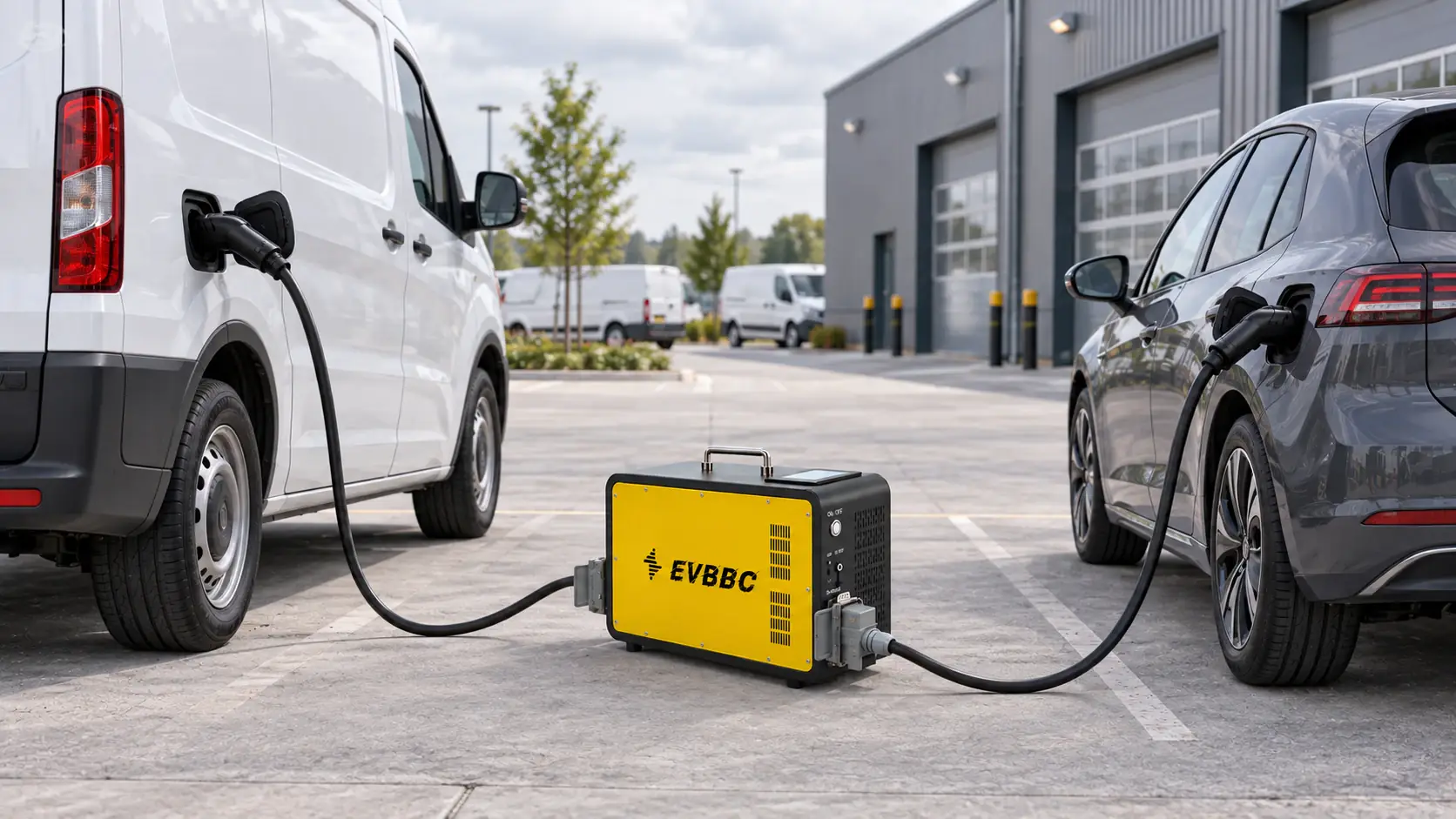
Charge one compatible EV from another.
Connection diagram. Vehicle support and the selected configuration must be confirmed before ordering.
- 01 · SOURCE
Compatible donor EV
Confirm discharge support, vehicle interface and battery voltage.
- 02 · DC → DC
20kW mobile DC charger
Match the two cable ends to the donor and receiving vehicles.
- 03 · RECEIVING EV
Compatible receiving EV
Confirm the charging inlet and supported voltage range.
Send both vehicle models and inlet details.
Need AC power for appliances? View V2LBest for trained service teams working with two known vehicles.
The 20kW portable DC vehicle-to-vehicle charger transfers energy directly from one compatible donor EV to one compatible receiving EV.
Fleet service support
Top up a receiving vehicle from a compatible donor vehicle during a controlled service window.
Workshop and handover
Support preparation, diagnosis or delivery tasks when both vehicles and the connection order are known.
Temporary response work
Plan vehicle positions, cable reach, traffic separation and operator steps before mobile use.
Check the donor side and receiving side separately.
A usable transfer point must fit the donor vehicle's discharge range and the receiving vehicle's DC charging range at the same time.
- Rated DC transfer power
- 20 kW DC transfer Actual transfer depends on both vehicles and their control limits.
- Donor-side DC input range
- 260–900 V DC · 0.2–34 A The donor vehicle must support discharge in the usable range.
- Receiving-side DC output range
- 50–750 V DC · 0.2–50 A The receiving vehicle controls the usable charging point.
- Full-load conversion efficiency
- >95.5% (full-load figure) Confirm the vehicle pair, cable set and measurement conditions.
- Operating temperature range
- −40°C to +75°C listed Storage, transport, ventilation and any output reduction depend on the operating environment.
- Cooling method
- Air cooled Keep the ventilation path clear during operation.
- Net weight before final cables
- <40 kg before final cable configuration Packing and cable choices change the handled and shipped weight.
- Cable length options
- 2.5 m · 3.5 m · 5 m Choose each side from vehicle position, inlet location and safe cable routing.
- Enclosure protection
- IP43 listed for this model We match the supplied enclosure and permitted operating conditions to the site details you send.
Check the enclosure, cable package and work-zone space.
Use the enclosure dimensions for storage and vehicle-payload planning. The final plan must also allow cable stowage, safe carrying and clear space around both vehicles.
Enclosure dimensions only. Cable package, packing size, restraint and operating clearances depend on the selected configuration.
Match the donor cable and receiving cable as one pair.
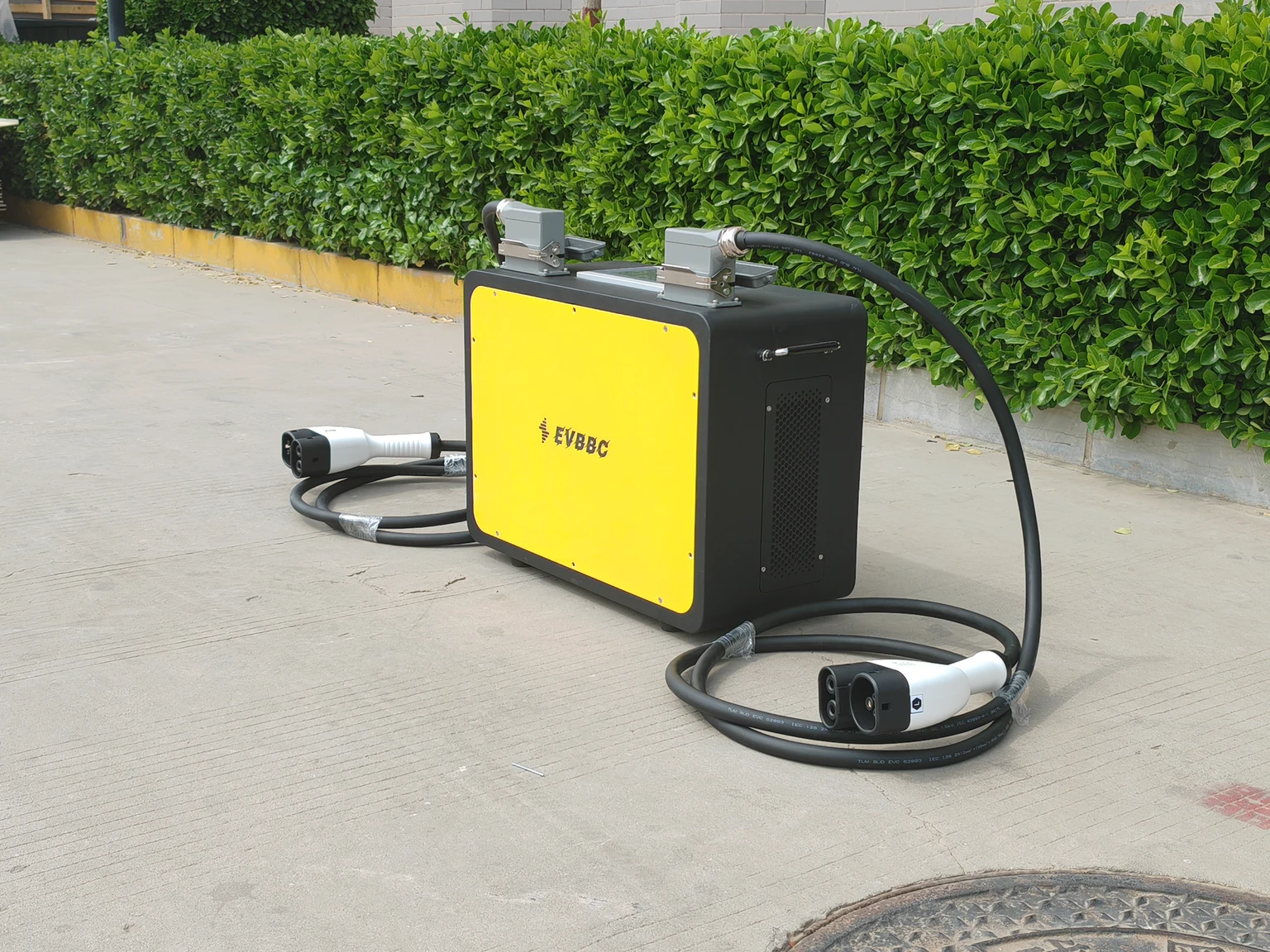
The photographs show a CCS2-to-CCS2 configuration. Connector shape alone does not confirm that the donor can discharge or the receiving vehicle can accept the transfer.
| Configuration shown | Connector family | What we need from you |
|---|---|---|
| CCS2-to-CCS2 configuration shown | CCS2 | The photographs show CCS2 at both ends. We still check donor discharge support, receiving-vehicle charging support, communication and cable lengths for the named pair. |
Send both vehicle makes, models, years, inlet photos and DC capability information. We use the details you send to match both cable ends, software settings and operating sequence.
See the enclosure and two-cable layout before planning the task.
These photographs show the EVBBC-branded unit, display area and cable arrangement.
Use these product photographs to plan carrying, placement and cable reach. We match the supplied cable pair to both vehicle positions.
Combine the charger, two vehicles, cables and operating procedure.
A useful V2V package tells the operator what connects where, how the work area is controlled and what support follows the order.
- 01Charger
Match the 20kW V2V charger configuration
Choose the power range, two connector ends, cable lengths and software settings for the vehicle pair.
- 02Vehicle pair
Check donor and receiving vehicles
Confirm donor discharge support, receiving-vehicle DC charging support and the shared electrical range.
- 03Work area
Plan safe positioning and operation
Define dry placement, traffic separation, cable routes, operator steps, logs and escalation contacts.
- 04Delivery
Agree packing and support
List the delivery term, documents, warranty, spare parts and remote diagnosis included with the order.
Know exactly what is included before placing the order.
Your project package brings the matched vehicle pair, charger, delivery terms and support into one written package.
Charger and cable pair
Named donor and receiving vehicles, two connectors, cable lengths, settings, procedure and document list.
Packing and delivery
Production schedule, packing, Incoterm, named handover point and destination responsibilities.
Warranty
Start date, duration, covered configuration, operating conditions, exclusions and remedy process.
Spares and support
Spare parts, log collection, remote diagnosis, response route and any on-site service included.
Send six details for a useful 20kW V2V charger quotation.
Both vehicles and the operating area should be known before selecting the cable pair.
- Destination country and intended operating area
- Donor vehicle make, model, year, inlet photo and discharge information
- Receiving vehicle make, model, year, inlet photo and DC charging information
- Target energy transfer, response time and expected daily use
- Vehicle positions, cable reach, traffic separation and work-zone photos
- Required product, transport, operating, warranty and support documents
Common questions before choosing a portable DC V2V charger.
01 Will every CCS2 vehicle work with the cable pair shown?
No. The donor must support discharge, the receiving vehicle must accept DC charging, and both electrical ranges, communication paths and software settings must match.
02 How is this different from a grid-powered portable DC charger or battery rescue charger?
This unit takes DC energy from a compatible donor EV and converts it for a compatible receiving EV. A grid-powered portable DC charger needs an external AC supply, while a battery rescue charger carries its own energy storage.
03 Can I order a different connector pair?
Send both vehicle inlets and destination details. We identify whether a supported connector pair and communication path are available for those exact vehicles.
04 Is this a V2V charging cable, a V2L adapter or a complete charger?
It is a complete mobile DC power-conversion charger with a donor-side cable and a receiving-vehicle cable. It is not only a cable, and it does not provide regional AC load outlets like a V2L product. Both vehicle interfaces, discharge and charging support, communication and operating limits must be matched together.
05 Can V2V20 be used for roadside service?
Tell us the operating location, vehicle positions, traffic controls, weather protection, cable route and operator procedure so the service path can be matched correctly.
06 Do the product photographs show a completed transfer test?
No. They show the EVBBC enclosure and two-cable layout. Vehicle-pair compatibility and operating results must be confirmed for the named vehicles.
07 How should I choose the two cable lengths?
Use the planned vehicle positions, inlet locations, protected cable route and stowage method. Each selected length is listed in the project package.
08 What information is needed for a quotation?
Send both vehicle records, the destination, transfer target, response time, work-zone photos, cable reach and required project documents.
Check the mobile charging path, both inlets and delivery next.
Get a 20kW portable DC V2V charger matched to your two vehicles.
Send both vehicle records, the transfer target, cable reach, destination and operating location.
Your project package covers vehicle compatibility, both cables, documents, delivery, warranty and support.Request price and availability
Your selected product is attached automatically. Add only what you already know.