What is OCPP 1.6, and what should a buyer verify?
OCPP describes communication between a charging station and its management system. The label alone does not prove that a particular charger and platform deliver every function your project needs. Confirm the exact releases, agreed functions and test results before ordering.
Request a project compatibility review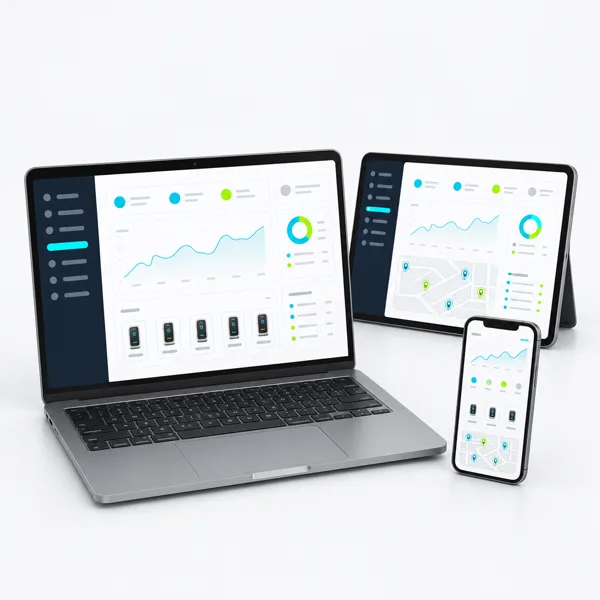
Separate from the vehicle connector
Name the implementation on both sides
A protocol label is only a starting point
OCPP 1.6 is a communication protocol, not a complete operating package.
The Open Charge Alliance maintains OCPP. Version 1.6 has SOAP and JSON forms; 1.6J refers to the JSON-over-WebSocket implementation. Ask which form, functions and security configuration the selected charging station and management system actually support.
- 01
Identify the charger model, firmware and backend release.
- 02
List the required operating functions and security arrangements.
- 03
Agree which supplier documents and acceptance test results are needed for that exact combination.
Specify the connection before accepting a compatibility claim.
Use the same shortlist with the charger supplier and the platform operator.
- 01
Identify both implementations
Record the charging-station model and firmware, the management-system release, and whether the project uses OCPP 1.6J or SOAP.
- 02
Agree the operating scope
List the authorization, remote control, charging records, power control and maintenance functions that the project actually requires.
- 03
Review a bounded acceptance record
Agree a test plan for the selected combination, including connection loss and recovery. Retain results and unresolved exceptions before rollout.
The vehicle plug and the backend protocol answer different questions.
Can this equipment serve the vehicle?
The physical connector, vehicle communication and electrical configuration still need their own compatibility review.
Can the station exchange the required data with its backend?
Confirm the protocol form, supported functions, security setup and behavior of the exact station and management system.
Turn a version label into an agreed integration scope.
This is a procurement checklist, not a mathematical guarantee of compatibility or service uptime.
Request test results for the tasks your site needs.
These are proposed procurement checks, not a claim that every OCPP product includes every feature.
Basic station operation
- Project need
- The operator needs authorization, remote control and charging records.
- Ask for
- An agreed function list covering the selected station and backend releases.
- Acceptance test results
- Results for permitted and rejected actions, recorded data and clear failure handling.
Smart charging
- Project need
- The site needs charging limits or charging profiles.
- Ask for
- The implemented Smart Charging scope, constraints and interaction with site controls.
- Acceptance test results
- Observed behavior with the agreed profiles and limits on the selected equipment.
Security and maintenance
- Project need
- The operator needs protected connections and maintainable equipment.
- Ask for
- The security configuration, certificate responsibilities, update procedure and event records.
- Acceptance test results
- An agreed security review and maintenance test record for the supplied release.
Platform change or mixed equipment
- Project need
- The project may change backend or use several charger models.
- Ask for
- A release-by-release compatibility matrix and a list of any vendor-specific extensions.
- Acceptance test results
- A bounded integration test; do not infer compatibility from a shared version label.
An OCPP version does not select a vehicle connector.
These connector illustrations identify a separate selection task; they are not proof of OCPP support.
AC vehicle connection
Check the vehicle inlet and electrical configuration independently.
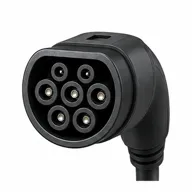
Type 2
- Typical planning market
- Europe / global
- Information to send
- Physical connector selection is separate from backend integration.
DC vehicle connection
Check the selected vehicle and charger communication independently.
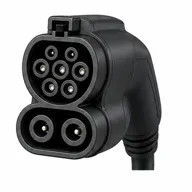
CCS2
- Typical planning market
- Europe / global
- Information to send
- A CCS2 connector does not establish an OCPP version or certification.
Review the station, the platform and the acceptance record together.
The visuals below are concepts. They do not show a live EVBBC installation, an implemented function or a passed test.
Charging-station release
Model · firmware · agreed functions Confirm in projectFix the equipment and software version that the integration scope actually covers.
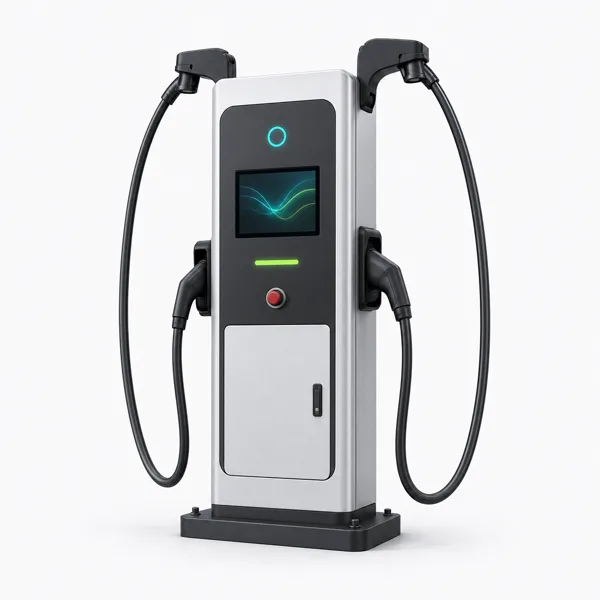
Management-system scope
Backend · configuration · responsibilities Confirm in projectDefine who owns connectivity, operating records, security configuration and maintenance.
Site-control acceptance
Required behavior · test results · exceptions Confirm by acceptanceRecord the agreed integration checks and unresolved limits before broader deployment.
Make the first integration review specific.
Provide what is known and label the remaining items as unknown.
- Charger manufacturer, model and firmware release
- Backend name, release and operator contact role
- OCPP form and the functions required by the project
- Destination, site network and responsibility for connection setup
- Security requirements, certificate ownership and update responsibilities
- Certification number and exact scope, if certification is required
- Planned acceptance cases, required records and rollout date
Six checks before accepting “OCPP compatible”
01 What does the J in OCPP 1.6J mean? +
It identifies the JSON implementation over WebSocket. OCPP 1.6 also has a SOAP form, so request the exact form supported by both station and backend.
02 Can an OCPP 1.6 charger connect to every OCPP backend? +
Do not assume that. Confirm versions, required functions, security configuration and any vendor extensions, then review an integration test for the selected releases.
03 Does OCPP 1.6 support Smart Charging? +
The protocol supports Smart Charging, but the implemented scope must be checked. Ask for the supplier’s technical documents and test the charging-profile behavior your site requires.
04 Does “OCPP 1.6J” mean the connection is already secure? +
No. OCA publishes security enhancements for 1.6J covering connection setup, security events and firmware updates. Confirm which measures the selected implementation uses and how they are maintained.
05 Is OCPP 1.6 directly compatible with OCPP 2.0.1? +
No. OCA states that these versions are not compatible. A migration needs a defined implementation and acceptance plan; changing a version label is not an upgrade.
06 Does “supports OCPP” mean the product is OCA certified? +
No. If certification is required, verify the certificate for the exact product and software version, including its tested scope. Protocol support is not itself a certificate.
Protocol, security and certification references
Share the charger, backend and operating requirements.
Add the destination, quantity and target date. Known versions and required functions make the first review more useful.