Serve two parking bays from one dual-port AC charger.
A dual-port pedestal can simplify parking layouts, but two sockets do not automatically mean both vehicles receive full power at the same time. Start with dwell time, available building power and the exact two-output profile.
Build my two-bay plan
Hotels, workplaces and managed parking
Compare two current catalogue entries
Confirm both ports and building capacity
Choose the dual-port power class from parking time and site capacity—not from the largest number on the page.
EVBBC offers floor-standing dual-port AC charger options rated at 7+7 kW and 22+22 kW. Before choosing a configuration, confirm vehicle AC limits, phase supply, simultaneous operation, cable or socket choice and whether managed load control is required.
- 01
Which two-output profile fits the vehicles and parking time.
- 02
Whether both outlets can run together at the selected rating.
- 03
What the site must provide for protection, cabling and control.
Plan two parking bays as one electrical load.
The charger, building supply and parking pattern need one coordinated scope.
- 01
Measure dwell time
Overnight and full-workday parking can often use a lower power class than short visitor stays.
- 02
Check both vehicles
Record vehicle AC inlet type, onboard AC charging limit and whether a tethered cable or socket is preferred.
- 03
Confirm simultaneous power
Review building capacity, diversity, protection and load control before promising the rating available on both ports.
Two outlets and two full-power sessions are different promises.
Two vehicles can connect to one unit
The physical outlet count does not by itself confirm how power is shared while both vehicles charge.
Keep charging inside the building's power limit
The control system can reduce or schedule charging instead of allowing the combined demand to exceed the agreed site limit.
Size the charger around usable parking hours.
The final circuit, protection, diversity and installation design are confirmed for the destination project.
Where each profile enters the shortlist
These are planning positions, not automatic site selections.
Hotel or apartment parking
- Parking pattern
- Vehicles remain for many hours or overnight.
- Starting profile
- Review the 7+7 kW profile first.
- Confirm before quote
- Daily energy need, connector, billing and allocated site power.
Workplace parking
- Parking pattern
- Vehicles remain through a work shift.
- Starting profile
- Compare both profiles against fleet and visitor demand.
- Confirm before quote
- Simultaneous sessions, phase supply and load-management rule.
Higher-turnover destination
- Parking pattern
- Drivers expect more energy during a shorter stop.
- Starting profile
- Review the 22+22 kW profile and vehicle AC limits.
- Confirm before quote
- Vehicles can accept the power and the site can support both outputs.
Compare the two current dual-port AC starting points.
Open each catalogue page to compare its configuration, product image and project inputs.
7+7 kW dual-port floor-standing AC
Two AC outputs · 7+7 kW profile Catalogue profileA starting point for long-stay parking where overnight or workday dwell time carries more of the charging task.
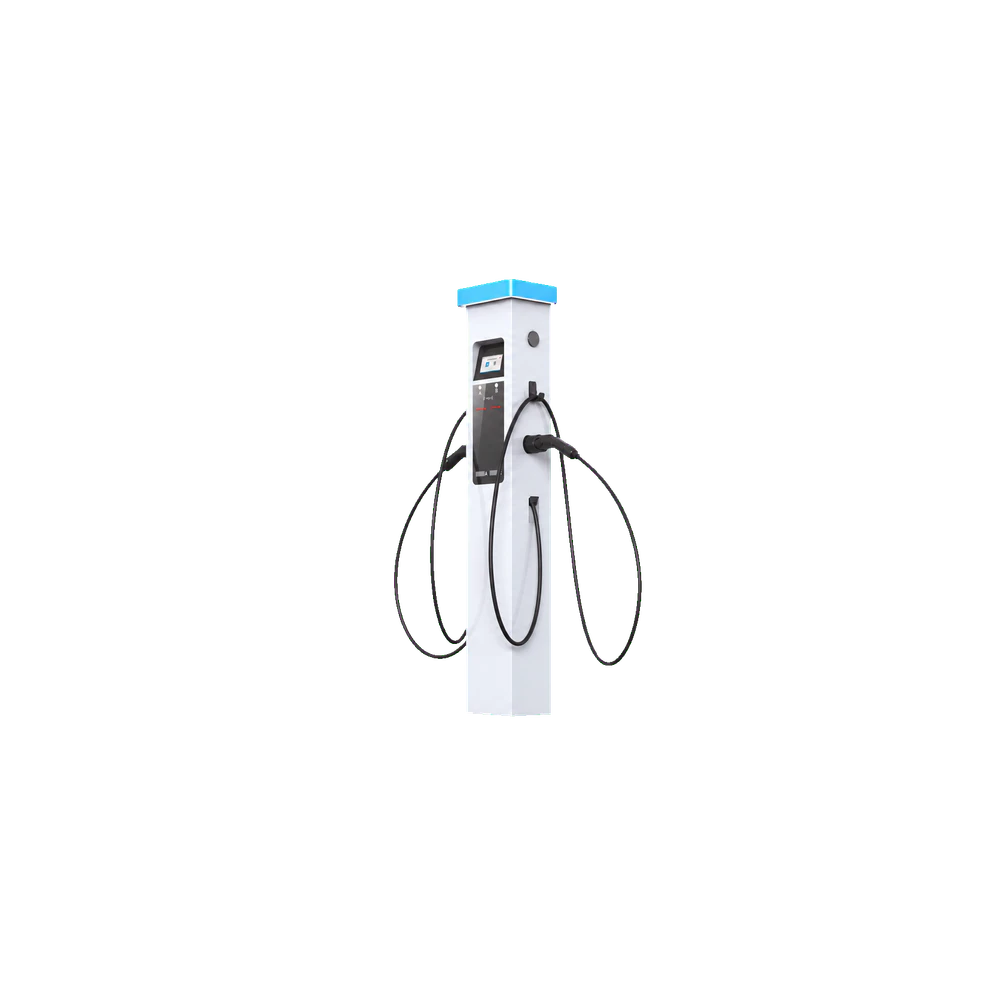
22+22 kW dual-port floor-standing AC
Two AC outputs · 22+22 kW profile Catalogue profileA higher-power starting point when the vehicles, phase supply and simultaneous site capacity support it.
Six details produce a useful dual-port recommendation.
You do not need a finished electrical design for the first review.
- Number of parking bays and expected simultaneous sessions
- Typical parking duration and energy needed per vehicle
- Vehicle inlet and onboard AC charging limit
- Available single-phase or three-phase supply
- Tethered cable or socket preference
- Destination country, mounting position and billing requirement
What commercial buyers ask before ordering
01 Will both ports deliver their full stated power at the same time? +
That must be confirmed for the exact product profile and site supply. Port count alone does not prove simultaneous full-power operation.
02 Is 22+22 kW always better than 7+7 kW? +
No. Vehicle onboard charging limits, dwell time, phase supply and building capacity decide whether the additional rating produces useful charging.
03 Can the charger avoid overloading the building? +
A project can include an agreed load-control strategy. Metering location, control interface, fail behavior and maximum site allocation are confirmed in the project scope.
04 Which connector should be selected? +
Choose from the vehicles and destination market. Type 2 is common in Europe, while Type 1 or NACS-related AC arrangements may apply in North America; the quote records the exact choice.
Current EVBBC catalogue records
Match the dual-port charger to your parking pattern.
Share the bays, dwell time, vehicles and destination. The configurator carries them into your project request.